
Recovery and Reunion

![Apple Podcasts md:mr-[10%]](/apple.png)


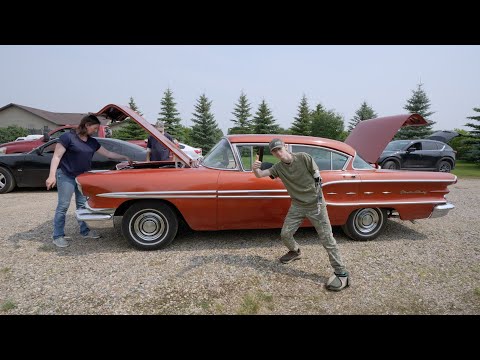
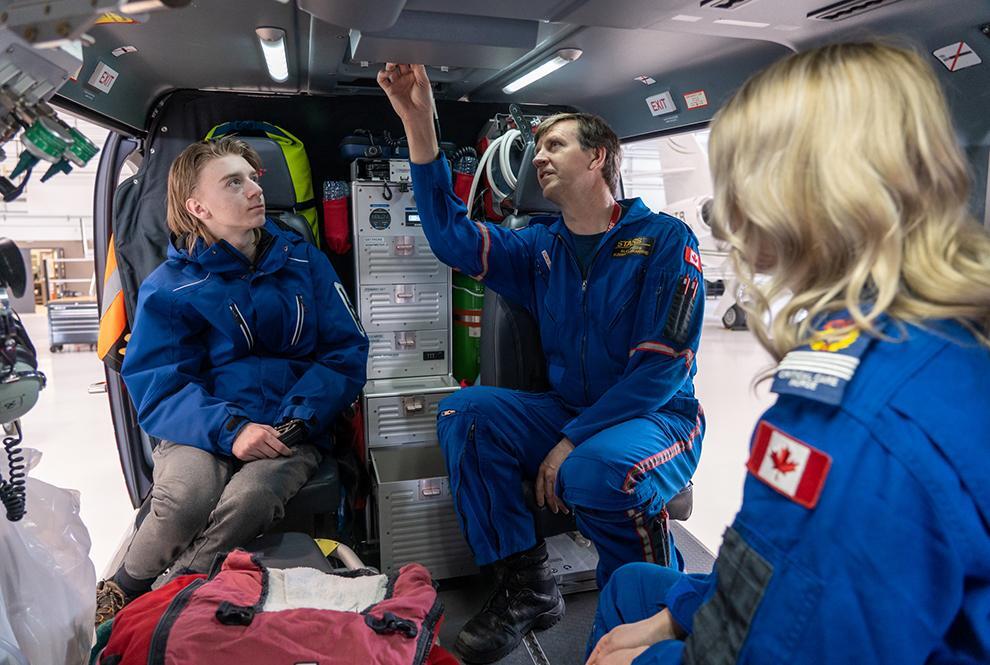
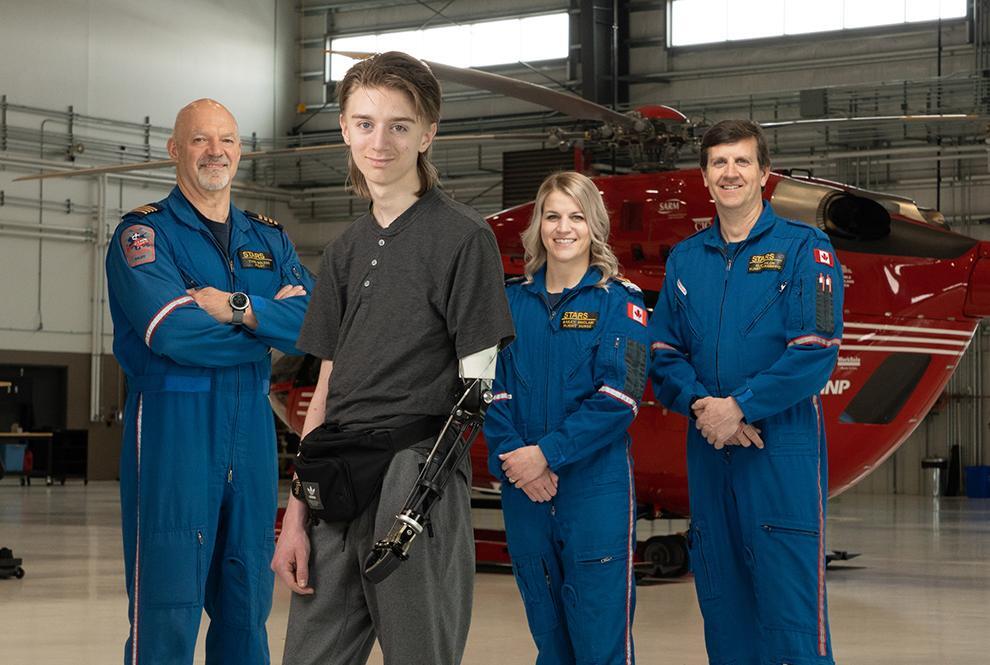
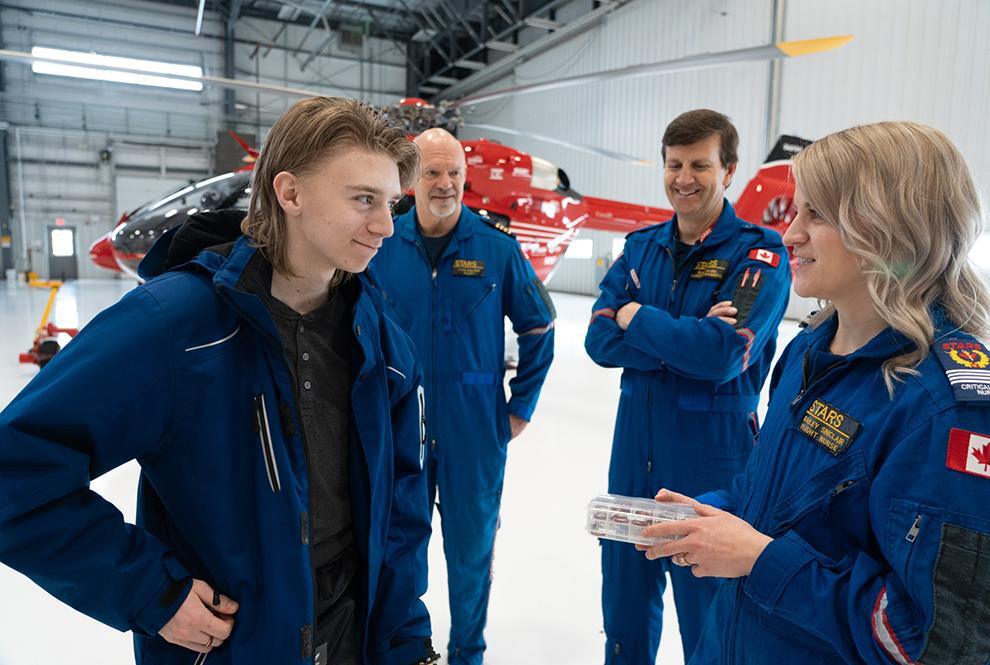
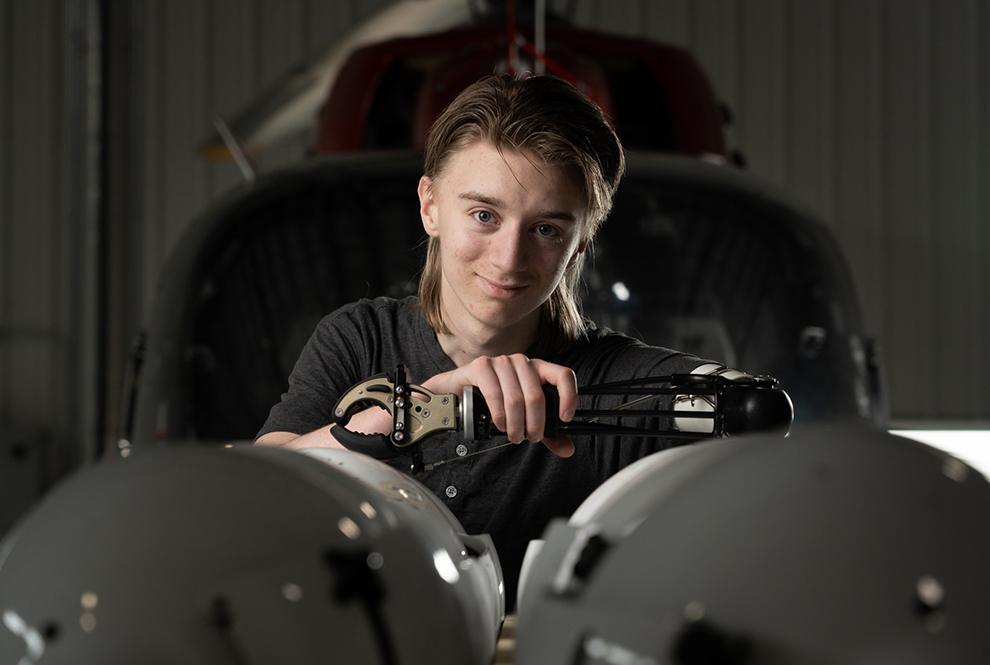
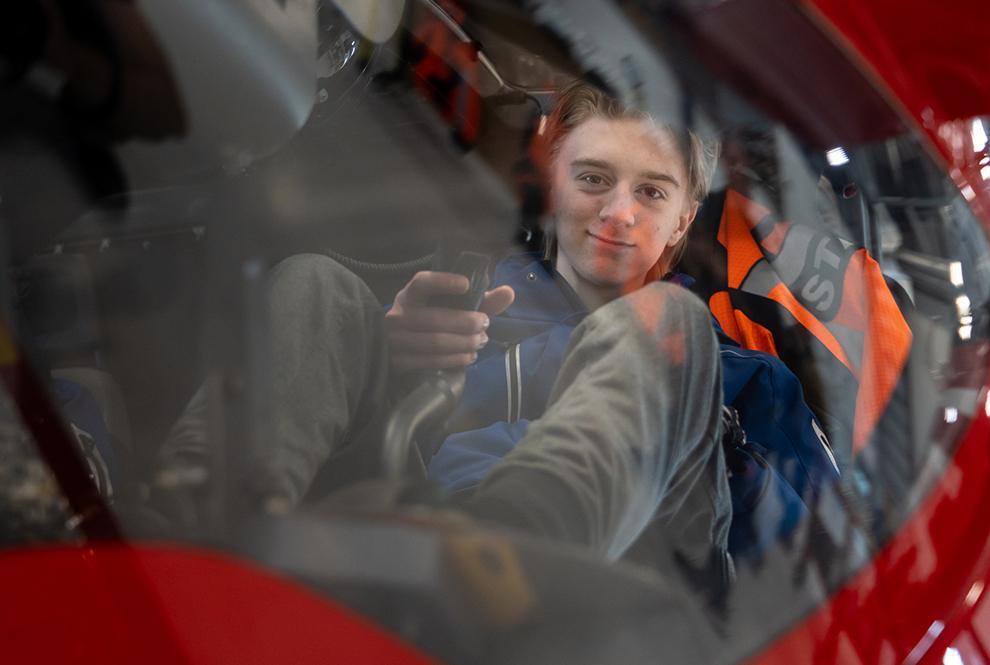
Recovering from a traumatic event takes a village, and the support network surrounding Draidyn is helping him move forward in life. It helps that he has an incredibly grounded and positive spirit that keeps him looking forward. Part of the healing journey includes a trip to the city to reunite with the STARS crew members who flew to his side and helped to provide the critical care that saved his life. Watch Draidyn drive his ’68 Pontiac in a bonus video below.
You know deep down inside you that this could have turned out quite a bit different. It was happy, to say the least, that he was able to come back and see us at the base and to see the helicopter that he flew in.”
- Glen Pilon, STARS flight paramedic
Episode 6 Bonus Content
-
Season 2, Episode 6 Transcript
00:00:02:00 – 00:00:33:20
Co-host Deborah Tetley: Before we start, a word of caution. As you know, STARS provides pre-hospital care for critically ill and injured patients who have sustained severe trauma or debilitating illnesses. It’s what we do. As such, some of the details in this podcast may be difficult for some listeners. The STARS mission being explored this season involves graphic descriptions of physical injuries to a youth. Psychological impacts are also detailed. The patient’s family and supporters have generously allowed us to tell this story as a personalized insight into STARS.00:00:33:23 – 00:01:08:04
Co-host Lyle Aspinall: And for that, we are genuinely grateful. The community, and everyone else who was involved, welcomed us with open arms to help us tell this story. Having spent time with about 20 people researching it and recording interviews on the phone, virtually, in studio, and right at the scene of the incident, we can tell you this: our conversations were raw and candid, and as such, some of the details uncomfortable. For this podcast, we’ve endeavoured to tell the story accurately without being too sensational. Still, listener discretion is advised.00:01:08:07 – 00:01:20:11
Chris Dennis: This kid’s a fighter. Like, this kid’s going to go places in life. He went to the end and back, and he’s there for it, right? I don’t think there’ll be much that will slow him down now.00:01:20:14 – 00:01:24:10
Kevin Burrell: I don’t know if I could be that positive if I was in the same position.00:01:24:12 – 00:01:35:13
Flight nurse Bailey Sinclair: Draidyn coming back to visit is just so important for us, because it helps us as air medical crew to see why what we do matters.00:01:35:15 – 00:01:44:09
Yves Bolduc: What I’ve seen since I’ve been at STARS is that STARS gives hope to a lot of families that otherwise, before, they were not able to get that hope.00:01:44:11 – 00:01:59:15
Co-host Deborah Tetley: Welcome to Mission Ready, presented by ARC Resources. This STARS podcast breaks down in detail one mission each season to give you a stronger understanding of how we provide critical care anywhere, and what happens before and after the mission. I’m Deborah Tetley.00:01:59:17 – 00:02:15:26
Co-host Lyle Aspinall: And I’m Lyle Aspinall. In Season 2, we’re analyzing an emergency response to a traumatic incident where a teenager was run over by an industrial-sized riding lawnmower in Laird, Saskatchewan. This is Episode 6: Recovery and Reunion.00:02:15:29 – 00:02:39:27
Co-host Lyle Aspinall: In the last episode, you heard teenager Draidyn Wollmann talk about what happened after being run over by a riding lawnmower he was operating and about his recovery since then. Today we are widening that view of his recovery because hearing it from those around him is inspirational. To do that, let’s pick it up a few days after the incident, when he’s just come out of an induced coma and is starting to communicate with friends at home.00:02:39:29 – 00:02:50:23
Karleigh Dennis: I was like, Okay, he’s good, he’ll live. But let’s just hope he, you know, can still actually function right and walk and, you know, use his arms.00:02:50:25 – 00:03:02:10
Co-host Lyle Aspinall: That’s Karleigh Dennis, referring to when she first heard from Draidyn while he was still in the hospital. Remember, Karleigh is the one who first alerted Draidyn’s boss that he was missing in the first place, setting off the search that led to his life being saved.00:03:02:12 – 00:03:06:10
Karleigh Dennis: Until I found out his arm got amputated.00:03:06:12 – 00:03:15:03
Co-host Lyle Aspinall: Yeah, Draidyn had lost his left arm at the elbow, but even in the earliest moments of that new reality, there were already signs of the positive attitude he would take.00:03:15:05 – 00:03:24:11
Karleigh Dennis: When I first saw him, it was a picture of him lying in his hospital bed with his arm bandaged up, and he was giving a thumbs up.00:03:24:13 – 00:03:31:00
Co-host Lyle Aspinall: Now, that doesn’t mean it was easy for him when he first found out. He said as much when we inquired about those early moments.00:03:31:03 – 00:03:37:24
Co-host Deborah Tetley: Do you remember what it was like the first time that you actually looked and realized what a challenge lie had?00:03:37:26 – 00:03:41:20
Draidyn Wollmann: I guess terrified and grossed out, I guess.00:03:41:23 – 00:03:43:07
Co-host Deborah Tetley: And what about now?00:03:43:10 – 00:03:45:25
Draidyn Wollmann: I’m okay now, I guess.00:03:45:28 – 00:04:03:22
Co-host Lyle Aspinall: But understandably, it’s a roller coaster. Not only is he adjusting to life with a prosthetic arm, but when we last spoke with him, he was also still wearing a walking cast for his ankle injury, and clothing concealed his chest injury. But it’s a safe bet he was still healing there too. Point is, when the lows hit, they’re awful.00:04:03:25 – 00:04:08:24
Draidyn Wollmann: Sometimes it just feels like you’re all alone, I guess, is the way to explain it.00:04:08:27 – 00:04:16:29
Co-host Lyle Aspinall: Yeah, that’s totally fair. But you know, there’s an underlying root of positivity to Draidyn that just seems to always shine through.00:04:17:01 – 00:04:20:03
Co-host Lyle Aspinall: You were in the hospital for several weeks. How long was that?00:04:20:05 – 00:04:24:13
Draidyn Wollmann: I was in the hospital for two months and four days.00:04:24:15 – 00:04:30:02
Co-host Lyle Aspinall: Let’s go to the end of that two months and four days, the day that you get to go home. Talk to me about that.00:04:30:04 – 00:04:37:07
Draidyn Wollmann: Happy. Very happy. And I can say “goodbye, hospital” and “hello, home.”00:04:37:10 – 00:05:01:24
Co-host Deborah Tetley: One of the reasons Lyle and I were so intrigued by Draidyn’s incident and wanted to share his story, was because we understood that it didn’t stop when STARS transferred his care at the hospital. That’s really only where it began, as it does for many patients. Recovery takes a village. And one of the professionals in Draidyn’s village, tasked with helping him adjust to life with a prosthetic arm, is Sharon Kingston.00:05:01:26 – 00:05:39:06
Sharon Kingston: So, I’m an occupational therapist who works at Kinetic Rehabilitation Services, part of the Saskatchewan Health Authority. Draidyn was referred to me by a physiotherapist, or rehab medicine doctor, to see him for pre-prosthetic — so, before he got his artificial arm — and post-prosthetic training. So, I initially started seeing him in October before he got his prosthesis, to work with him regarding desensitization and maintaining movement in the residual, or the part of the arm that was still left after his amputation. And then things have progressed since here.00:05:39:08 – 00:05:41:11
Co-host Lyle Aspinall: So you’ve known Draidyn for several months now?00:05:41:14 – 00:05:42:17
Sharon Kingston: Oh, yes. Quite sometime.00:05:42:20 – 00:05:44:11
Co-host Lyle Aspinall: What kind of a patient has he been for you?00:05:44:14 – 00:06:17:17
Sharon Kingston: He is an– just a great kid. There’s so many factors that play into somebody’s recovery and rehabilitation after a traumatic injury like Draidyn’s had — obviously a very devastating thing. [He] has incredible family support, is incredibly motivated himself and has goals and aspirations of what he wants to be able to do, both for fun and just leisure pursuits, all those kinds of things. So he’s been very engaged and motivated in the process, so he’s been a joy to work with, quite honestly, yes.00:06:17:19 – 00:06:22:10
Co-host Lyle Aspinall: Can you give us kind of a high-level view of what you do with Draidyn and how you help him along?00:06:22:11 – 00:08:54:09
Sharon Kingston: Sure. So, in that initial stage before the client, and especially Draidyn, gets his prosthesis, where the arm has had– or, sustained the laceration or the amputation, the nerves are very hypersensitive to touch. Obviously, if you have to wear a prosthesis, you have to have that arm be able to tolerate the touch, the pressure, the movement with the prosthesis on. So, we spend a lot of time on what kinds of things can you do to desensitize that. So, rubbing the amputated stump with different textures and materials, getting it used to vibration, to jarring, to bumping — all the things that you normally have happen during your day-to-day activities. And then also looking at how Draidyn could become as independent as possible prior to getting his prosthesis. So, what kinds of things could I give him advice on in terms of how he could do home activities or his current leisure pursuits? So, one of his things is, he’s very mechanical, and he really wanted to get back to being able to build motors and design little activities in terms of Lego. And because he only had one arm, everything was always swishing around for him and he couldn’t keep it stabilized in one place. So, we got him some rubberized matting called dycem, and he sent me a video clip that day like, Oh, I can do this again. And he was just so pumped about being able to get back. And he made this motor and showed me a little video clip of it actually working. So, that’s– it was really rewarding for me and for him in terms of him being able to, okay, I can still do the things that I did before my injury, I’m just going to have to change how I look at it again. And so he’s always been driven like that: Okay, what’s the next thing you want to work on? What’s the next thing? Like, being able to tie your shoelaces. So, that was one of the big things when he first got his prosthesis, okay. Not that a lot of 16-year-olds actually tie a bow in their shoelaces, but he definitely– it was one of those goals to be able to do two-handed things again. So, we start with something that’s fairly light and not a crazy amount of resistance. So, they can just build on those skills. And so being able to accomplish that, How do I tie a bow with using a prosthesis? How do I do two-handed activities at home? If I wanted to work on a car, can I do two wrenches at the same time? And how does that look? And what do I have to do?00:08:54:11 – 00:09:05:13
Co-host Lyle Aspinall: Those are great questions because just a year after his incident, Draidyn was beaming as he showed off his new pride and joy.00:09:05:16 – 00:09:18:23
Draidyn Wollmann: She’s a 1958 Pontiac with a 283 V8 in her. Manual. Three on the tree. Very nice car.00:09:18:25 – 00:09:30:17
Co-host Lyle Aspinall: It’s a 58 Pontiac Strato Chief, to be exact, the Canadian cousin to the Star Chief, and it really is a beauty. After changing the fuel filter with his grandpa, Draidyn gave Deb and I a ride.00:09:30:17 – 00:09:54:15
Co-host Lyle Aspinall: …and I’m gonna roll down a window to the side…00:09:54:15 – 00:09:56:13
Co-host Deborah Tetley: …oh, yeah, look at that ashtray, hey? That’s crazy.00:09:56:13 – 00:09:56:14
Draidyn Wollmann: Ready?00:09:56:14 – 00:09:56:15
Co-host Lyle Aspinall: Yep.00:09:56:15 – 00:09:56:20
Christine Wollmann: Put it in reverse. You sure it’s in there?00:09:57:00 – 00:10:05:02
Co-host Lyle Aspinall: I’ve got to say, watching Draidyn work through the gears on a manual transmission is a great view into the kind of determination his occupational therapist, Sharon, sees in him.00:10:05:04 – 00:10:44:20
Sharon Kingston: It’s not an automatic. It’s a standard. So, just all those things. So, he sees himself as, Yeah, I’m going to go on, I’m going to be what and do what I want to do in life. And so, having that kind of inner motivation and drive to do things like getting those little snippets, me driving my first car. Like, you know, he’ll send me an email with him in the car. It’s just, it’s very, very rewarding. And you can just see his motivation and drive to kind of, I’m going to do this thing. And yeah, I’ve been handed a bad lemon here, but I’m going to make the best damn lemonade ever out of this situation. So it’s very rewarding.00:10:44:23 – 00:10:59:26
Co-host Lyle Aspinall: And like she said earlier, he’s not doing it alone. As we researched this story, we kept finding more and more people who wanted to help us out. Many of them knew Draidyn personally, and we heard a lot of comments about Draidyn’s strength and support network. Laird fire chief Chris Dennis summarized it well:00:10:59:29 – 00:11:22:02
Chris Dennis: Couldn’t ask for a better young man. Very– he’s got, like, a real old-man’s personality and and traits about him, right? Like, just watching him ride and — before the accident — watching him riding the lawnmower around, from a distance you would swear it was, like, a 60-some-year-old man riding the lawnmower, just how his demeanor is.00:11:22:02 – 00:11:27:27
Co-host Lyle Aspinall: He saw Draidyn after his release from hospital early in the teen’s recovery period.00:11:27:29 – 00:11:33:08
Chris Dennis: He had to have a special machine with him that provided suction for his chest.00:11:33:08 – 00:11:43:00
Co-host Lyle Aspinall: And, but when you saw him up and about, walking around, sure, he doesn’t have an arm and he has the suction on his chest, but he’s up and about and he’s walking around — What was going through your mind?00:11:43:00 – 00:12:18:26
Chris Dennis: At that time? You know, like, this kid’s a fighter. That was– every time I see him is, is the thoughts that go through my mind is, this kid’s a fighter. Like, this kid’s going to go places in life. He went to, he went to the end and back, and he’s there for it, right? He’s a fighter that’s not going to give up in life. And he’s not going to not going to take no for an answer for stuff. I don’t think there’ll be much that’ll slow him down now.00:12:18:29 – 00:12:30:11
Co-host Deborah Tetley: When you drive into Laird, a sleepy little village of just roughly 250 people stuck in the middle of smoothly flat Saskatchewan prairie, you’re greeted by a telling sign.00:12:30:14 – 00:12:50:22
Christine Wollmann: Our sign when you first come into town, it says, “Welcome to Laird.” And then it says, “The community that pulls together.” And I can truly say that that happens, that when anything goes on, that we’re always, like, everybody’s always involved and we try to do our best to support everybody.00:12:50:24 – 00:13:14:12
Co-host Deborah Tetley: You might recognize that voice from previous episodes. It’s Christine Wollmann, Draidyn’s mom, who was by Draidyn’s side before the firefighters even lifted the lawnmower off him, and who has been a rock for him throughout his recovery. First responder Kevin Burrell, who lived in nearby Waldheim when the incident occurred, knows Christine and was amazed by her strength and the community that has buoyed the Wollmann family all along.00:13:14:15 – 00:13:19:15
Kevin Burrell: Yeah, through the whole thing. I don’t know how she does it. She—00:13:19:18 – 00:13:21:16
Co-host Deborah Tetley: It’s true.00:13:21:19 – 00:13:30:29
Kevin Burrell: Yeah, she’s an amazing person. She stayed so positive. The whole family did. And I, I don’t know if I could be that positive if I was in the same position.00:13:31:02 – 00:13:39:21
Co-host Deborah Tetley: You know, did she have the town rally around? Did the family have the town rally around them? I know it’s a small place, but was there a lot of community support?00:13:39:23 – 00:14:33:14
Kevin Burrell: Yeah, yeah, that was another amazing thing. The whole town got behind her and did what they needed to do. It was a week later, I was attending a golf tournament, Jordan Zacharias Golf Tournament. Jordan Zacharias was a girl from Waldheim that died of cancer while she was in high school. Her family started this fund because they wanted to help families that were going through what they went through. So, I’m at the golf tournament and I know the people that are on the board a little bit, because some of them are from Waldheim. And the golf tournament’s over — we had a great time; raised a lot of money for that cause — and I was talking to one of the people there and I said, “You know what? I don’t know if you know about this incident in Laird, but if anybody could use some help, I think they could.” A day later, I got a text from them that said, “We’re sending them a gas card.” They gave them enough so that Christine can drive to the hospital and back every day.00:14:33:16 – 00:14:54:03
Co-host Deborah Tetley: And they weren’t the only ones to help out. A GoFundMe raised thousands to help cover expenses, while Christine, a single mom, was juggling work and Draidyn’s medical appointments in the city, which was a 45-minute drive away. On top of that, people began dropping off flowers at her house, where her other son, Kacetyn, who’s a couple of years older than Draidyn, was holding down the fort.00:14:54:05 – 00:16:13:12
Christine Wollmann: : Kacetyn said that at first it was a little overwhelming, but then he said that people came and— like, because they were bringing flowers, and so I posted on the thing, I said that I really enjoy the flowers, but I’m not going to be home to enjoy them. So, I said that if people would like to buy me flowers, they can buy me outside flowers, right, so that everybody can enjoy them. So, then there was people bringing flowers for that. So, I thought that was pretty cool because I always try to do my best to decorate my yard nice in the summer. And this was the one summer that I didn’t get to do that. And so it was nice to see other people helping out with doing something like that. And people would be dropping meals off for Kacetyn and we had a couple of friends who took Kacetyn in to feed him and whatnot, because it was— like, I was at the hospital [every] day. And then every second night, at first, I was coming home. And then after the ICU, then I pretty much stayed the whole week, and then I would just come home in the evening on the weekends and then come back during the day. But there were so many people that it was, it was amazing.00:16:13:14 – 00:16:29:23
Co-host Deborah Tetley: One of those people was Karleigh Dennis, who you heard at the beginning of this episode. She’s a friend of Draidyn’s, and it was she who first alerted village foreman Warren Peters that Draidyn was missing, setting off the manhunt that led him to being saved in the nick of time. She was part of the hands-on effort to help out the Wollmann family.00:16:29:25 – 00:16:54:17
Karleigh Dennis: Basically, Christine was living at the hospital almost, and because she took a lot of time off of work, and— basically, we did this thing where we put money in an envelope and we’d go around to every single house, donate money, and we’d give the envelope to Christine. Also for Kacetyn, too, because he’s 18 and he’s in school and working so. But he took time off work too, so.00:16:54:19 – 00:17:01:10
Co-host Deborah Tetley: Wow. It’s pretty wild, but— Do you ever look and think, I can’t believe that I was a part of this?00:17:01:13 – 00:17:04:01
Karleigh Dennis: Oh yeah, I do all the time.00:17:04:04 – 00:17:09:20
Co-host Deborah Tetley: He’s really lucky that you were part of it. You could have just went and knocked on his door and went home and like,00:17:09:20 – 00:17:10:06
Karleigh Dennis: Yeah.00:17:10:09 – 00:17:11:09
Co-host Deborah Tetley: That was that.00:17:11:11 – 00:17:24:29
Karleigh Dennis: Yeah, no, I think to myself, like, if I didn’t see Warren or if I just didn’t talk to him or anything, that he— it would have gone bad, it would have been basically it for him. But I’m glad I did.00:17:25:01 – 00:17:25:29
Co-host Deborah Tetley: So are the rest of us.00:17:26:04 – 00:17:30:11
Karleigh Dennis: Yeah.00:17:30:13 – 00:17:35:22
Co-host Lyle Aspinall: And now, a quick word from our Season 2 sponsor.00:17:35:25 – 00:18:11:17
ARC Resources ad spot: As Canada’s third largest natural gas producer and the largest producer of condensate, ARC Resources is proud to play an important role in the responsible development of Canada’s energy resources in delivering those resources. Safety is the number one priority, always, and it’s that core value that makes ARC’s partnership with STARS a natural fit. It’s our shared goal to ensure that everyone arrives home safely at the end of the day. Learn more about how ARC is leading the way for safe and responsible energy development at arcresources.com.00:18:11:19 – 00:18:14:28
Co-host Lyle Aspinall: Welcome back.00:18:15:00 – 00:18:58:04
Co-host Deborah Tetley: Less than a year after his incident, Draidyn’s family hit the road to Saskatoon. As a STARS Very Important Patient, or VIP, he was ready to be reunited with his STARS crew members and take a tour of the hangar. Many people came with him, including a lot of the people you’ve met in this podcast. His mom, Karleigh, her dad the fire chief, Draidyn’s former boss, plus many others, like his brother Kacetyn and his grandpa. And there at the STARS base to greet him were his flight paramedic Glen Pilon, flight nurse Bailey Sinclair, pilot Yves Bolduc, and clinical operations manager Daniel Kobylak, the STARS flight paramedic who rerouted from volunteering at a STARS fundraiser to help with this call. Here’s how Glen remembers that visit.00:18:58:06 – 00:19:17:00
Flight paramedic Glen Pilon: Pretty emotional. You got to try and hold the tears back, and you just want to go up and give them a hug. And because, you know deep down inside you that this could have turned out quite a bit different. It was happy, to say the least, that he was able to come back and see us at the base and to see the helicopter that he flew in.00:19:17:02 – 00:19:21:15
Co-host Lyle Aspinall: Absolutely. That was a big, big group that came in that day. Good support structure, that’s for sure.00:19:21:18 – 00:19:24:19
Co-host Deborah Tetley: What did the family say to you? What did Draidyn say to you?00:19:24:21 – 00:19:56:26
Flight paramedic Glen Pilon: Draidyn was pretty thankful. He started talking about the call very openly. He didn’t hold anything back. He spoke of things that he remembered from the call. He spoke of how he remembers landing on the helipad. He remembers going down to the emergency department. He remembers lots of voices around in the emergency room. To hear that from a patient that was that critical, it’s pretty, pretty amazing that he had that awareness of him.00:19:56:29 – 00:20:07:09
Co-host Deborah Tetley: As for Bailey, remember: this mission happened on her very first solo shift after weeks of intense training with STARS. And so Draidyn was just the second patient she cared for on that shift.00:20:07:12 – 00:21:29:05
Flight nurse Bailey Sinclair: I feel like a call like this could definitely be one that might make or break your career, or really kind of test you whether this is something you still want to do. Whether you’re able to help people in those situations. And I think what this call did for me was just made me want to help more and more people. Like, I think it just made me hungrier to learn and grow. And just excited to see what this future in this career has for me, because I’m like, if we can save a life on every call, like, that’s a lot of lives saved. And I just think it’s a very amazing thing, what we can do. So I’m grateful for that call and how it went in getting to meet Draidyn and just all of the wonderful things that have come from it. So when Draidyn came in that day into the hangar, I remember feeling, before the visit, very nervous, unsure. I knew it could be a very emotional meeting because it was a very emotional call for me. However, I think to see him doing so well and to be so happy and excited to be there and to meet his crew, I think that took away all of my worries of the nervousness, and it was just such a fantastic moment to see Draidyn and how well he was doing.00:21:29:07 – 00:21:37:06
Co-host Lyle Aspinall: Yeah, he was fascinated — we talked about it: sitting in the back, sitting in the front — he was fascinated by a lot of it. What kind of questions was he asking you?00:21:37:09 – 00:22:01:08
Flight nurse Bailey Sinclair: I remember Draidyn asking, like, where he was in the helicopter, where his mom was. He asked a bit about the equipment we used, the monitors, the ventilator, lots of different things like that. And he also definitely had a great interest in the helicopter itself, which thankfully, we had our pilots there to help answer some of those questions because they know a lot more about that stuff than I do.00:22:01:10 – 00:22:06:06
Co-host Deborah Tetley: Draidyn and his brother Kacetyn grilled pilot Yves Bolduc with questions.00:22:06:08 – 00:22:30:04
Draidyn Wollmann: Yeah, I was asking about if the helicopter had two engines to power the turbine engine, how to fire it up, how the stabilizers work, how fast it goes, how the medical kit works, how they loaded me in, and several other questions.00:22:30:07 – 00:22:33:05
Co-host Deborah Tetley: Mom Christine said she had to keep him in check.00:22:33:08 – 00:23:04:28
Christine Wollmann: It’s just amazing that he just asked so many questions and even just sitting in the helicopter. And then he got to sit in the pilot’s seat, but I told him, “Don’t touch anything, it’s not a video game,” right? And it was funny because, like, even Kacetyn and Draidyn were talking with the pilot, and they’re like, I bet you I can tell you how you start that thing. And they knew exactly how to start it. It was pretty cool.00:23:05:01 – 00:23:05:29
Co-host Lyle Aspinall: They’d been playing some simulators.00:23:06:00 – 00:23:56:04
Christine Wollmann: Yeah. Yeah. It was pretty neat. He was actually in such great spirits. He, I guess, he was surprising the crew with how positive he was. And then Bailey had said that, “Yeah. Your mom was so calm she was a rock star.” It was nice to hear, but it was also amazing hearing all the details of all of the little things that they did. Because I was always curious about that ultrasound, because I thought it was so cool how it could hook up to your phone. So, I asked about that, and he told me exactly what he was looking at, and he said that he was looking at his lungs. They were going up and down and I thought that was so cool.00:23:56:06 – 00:23:56:18
Co-host Deborah Tetley: Wow.00:23:56:20 – 00:24:09:02
Christine Wollmann: And then they were just showing all of the technology in the helicopter and how everything is so compact. And, you know, it was just amazing.00:24:09:05 – 00:24:31:14
Co-host Lyle Aspinall: Yeah, a quick note on that for our listeners: Our helicopters are often compared to flying ICUs, and that’s a pretty accurate summary. Thanks to the support of our generous donors, we not only carry ultrasounds like Christine just talked about, but also a cardiac monitor, a portable blood analyzer and infusion pumps, a ventilator, and a lot more.00:24:31:16 – 00:24:36:10
Co-host Deborah Tetley: You got to talk to Bailey. You got to talk to your son’s crew. And what do you say to them?00:24:36:10 – 00:24:46:10
Christine Wollmann: I just thank them lots, you know? And basically, if it wasn’t for STARS Draidyn wouldn’t be alive. I know that for a fact.00:24:46:12 – 00:24:47:06
Co-host Deborah Tetley: What makes you say that?00:24:47:09 – 00:25:14:06
Christine Wollmann: Because he lost way too much blood. Way too much. Being a first responder and knowing the injuries and knowing afterwards all what had happened, STARS saved his life, like, and with everybody else involved. We all did our part throughout Draidyn’s journey. Everybody who has touched his life, right? We all— Even just giving him a positive attitude, right?00:25:14:08 – 00:25:18:11
Co-host Deborah Tetley: Yeah. And it starts with the first person who found him.00:25:18:12 – 00:25:18:15
Christine Wollmann: Yeah.00:25:18:16 – 00:25:35:29
Co-host Deborah Tetley: And continues right through to physio and therapy and all of that. And I’m just wondering, if you had a chance to talk to the donors who made Draidyn’s mission possible, what would you say?00:25:36:01 – 00:25:47:03
Christine Wollmann: If we didn’t have STARS in our province, so many people’s lives would be different.00:25:47:06 – 00:25:57:29
Co-host Lyle Aspinall: Pilot Yves Bolduc made it a priority to attend the VIP visit at the base that day in Saskatoon. He was conscious going in of just how difficult it might be for the visiting family.00:25:58:01 – 00:27:11:28
Yves Bolduc: So, it’s very neat when we see a VIP wanting to come back, you know, to STARS, to meet the crew. I make everything else, you know, possible, you know, just to make sure, you know, that you got to be there. Because it takes even courage for them — now the patient — you know, to be able to face the crew. The helicopter for them can be traumatic. For some other people, oh no, totally the opposite. I want to go and say thank you, right? And just to hear their story, because there’s healing in speaking. If you go to a traumatic event and whatnot, if you can find someone that you trust, just speaking would help your mind, you know, put things, you know, back in the files in the right place. But if you keep everything inside and you never talk about it, it’s just going to keep on messing with you. It’s so nice to be able– Like, for me, I feel like thank you, by saying thank you to those people, those VIPs that are coming in because you’re closing doors for us, right? We actually are seeing someone that made it. What I’ve seen since I’ve been at STARS is that STARS gives hope to a lot of families that otherwise, before, they were not able to get that hope.00:27:12:00 – 00:27:17:21
Co-host Deborah Tetley: Bailey said VIP visits are just as valuable for STARS crew members as they are for the patients.00:27:17:24 – 00:27:57:12
Flight nurse Bailey Sinclair: I think that Draidyn coming back to visit is just so important for us, because it helps us as air medical crew to see why what we do matters, like, that we are saving lives, that we are helping people move on to the next step of their journey. And I just think it’s so rewarding because sometimes you don’t always get to see the patient outcome or what happens. You’re just such a short part of their journey. But to see the full circle in his recovery, it just makes it so worthwhile what you’re doing, and it just is so rewarding to be able to help out people where they need it the most.00:27:57:15 – 00:28:03:02
Co-host Deborah Tetley: Daniel Kobylak, the off-duty STARS paramedic who was called to help at the scene, echoed those thoughts.00:28:03:05 – 00:28:25:00
Daniel Kobylak: I’m always in awe of our VIPs and how [much] of an amazing outlook on life they have and just how upbeat they are. And it’s always a good reminder to live life to the fullest, because these people, in a lot of cases, have been given a second chance at life. And they come with just such an amazing outlook on life after that. It’s great to see.00:28:25:02 – 00:28:49:14
Co-host Lyle Aspinall: Of all the STARS crew members who were at the scene of Draidyn’s accident, the only one who couldn’t make it to the reunion was Alex Parra, the safety pilot. We talked back in Episode 3 about how much he loved helping crew. He can be forgiven for not making it to the reunion — Alex had moved on to a different flying career overseas just days after Draidyn’s mission. But we were able to reach him online in Germany, and he had a message for Draidyn.00:28:49:17 – 00:29:11:15
Alex Parra: Hopefully the kid can hear me. I say hi to him and I’m really glad to know that he is okay now. Knowing that he’s a VIP patient makes me feel really happy. Really happy that all that four times that I went back to the helicopter, running, out of breath, were really worth it. So, I’m happy to hear that.00:29:11:17 – 00:29:17:17
Co-host Lyle Aspinall: On the next Mission Ready, the final episode in Season 2.00:29:17:19 – 00:29:28:27
Warren Peters: Pretty difficult at first, just to come to grips with it. And definitely things that are bothered for a while. And I mean, they probably will for maybe years, I don’t know.00:29:28:29 – 00:29:38:00
Darcy McKay: And that’s why I say mental health is so important. Those calls stay with you. They’re a burden. So, so important to have those coping mechanisms to talk to people.00:29:38:02 – 00:29:45:00
Kayla Burrell: You’ll never get those images out of your brain completely, but you learn to live with it.00:29:45:03 – 00:29:50:06
Co-host Deborah Tetley: Mission Ready, presented by ARC Resources, is produced in-house by me, Deborah Tetley.00:29:50:11 – 00:29:55:16
Co-host Lyle Aspinall: And me, Lyle Aspinall. Watch video clips from this season at stars.ca/missionready.00:29:55:23 – 00:30:12:21
Co-host Deborah Tetley: Mission Ready contains original theme music by Kaiya Gamble, whose dad was a long time STARS pilot and whose mom was once a transport physician. Check her out at kaiyagamble.com. Please rate and review Mission Ready wherever you found it, and be sure to tell you friends about it. Also, check out Season 100:30:12:23 – 00:30:19:04
Co-host Lyle Aspinall: Want to be a STARS ally? Get involved and support our mission by visiting stars.ca. Until next time, thanks for listening.