
BONUS: Mental Heath and Emergency Responders

![Apple Podcasts md:mr-[10%]](/apple.png)


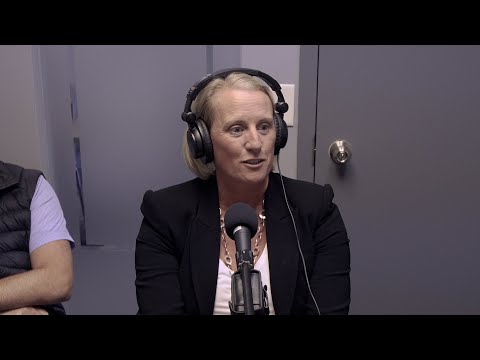
Dr. Megan McElheran, a clinical psychologist who specializes in helping emergency responders, talks through the brain science behind mental health and emphasizes the data-driven importance of looking after it, particularly in the emergency response field. We also hear from Ryan Collyer, the former advanced care paramedic Dr. McElheran hired to run the Before Operational Stress program she founded. Watch Ryan and Dr. McElheran talk about their core considerations in a bonus video below.
Please don’t treat yourself like a machine because you’re not. You have a soul and are impacted by things. And that’s all the beautiful tapestry that makes us who we are. And so let’s honour that.”
- Dr. Megan McElheran, Clinical Pshychologist
Episode 8 Bonus Content
-
Season 2, Episode 8 Transcript
00:00:04:27 – 00:00:58:12
Co-host Deborah Tetley: Welcome to a bonus episode of Mission Ready Season 2, presented by ARC Resources. We hadn’t planned to make a bonus episode this season, but then we interviewed Dr. Megan McElheran of Wayfound Mental Health Group. She created the Before Operational Stress, or BOS, program. You heard us talk about that in the final episode of Draidyn Wollmann’s story. It’s designed to create proactive mental health tools in emergency responders, a demographic that sees far more trauma than the average person. We wanted to learn from experts in the field about what emergency responders face before, during, and after an incident. What we got was a conversation that we couldn’t limit to just the brief portion you heard in that last episode. Dr. McElheran and Ryan Collyer, a former advanced care paramedic she hired to lead the BOS program, joined Lyle and I in studio.00:00:58:15 – 00:01:14:01
Dr. Megan McElheran: My name is Dr. Megan McElheran. I’m a clinical psychologist registered in the province of Alberta. I am the CEO of Wayfound Mental Health Group. I’m the developer of the Before Operational Stress program. I have many hats. You want me to keep going?00:01:14:04 – 00:01:14:25
Co-host Lyle Aspinall: Yes.00:01:14:27 – 00:01:35:12
Dr. Megan McElheran: Okay. I’m the chair of the clinical subcommittee of the National Advisory Council to the Public Safety Steering Committee. I am a contributor to a number of research projects within the Canadian Institute for Public Safety Research and Treatment. I’m a trainer of prolonged exposure therapy from Dr. [Edna] Foa’s program at University of Pennsylvania.00:01:35:14 – 00:01:39:15
Co-host Lyle Aspinall: You know, Deb, when I said we need an expert to weigh in, I think we got the right one.00:01:39:17 – 00:01:45:12
Co-host Deborah Tetley: I think we’re going to need to line you up for every podcast. We’ll fit you in somewhere.00:01:45:14 – 00:01:45:27
Co-host Lyle Aspinall: That’s right.00:01:46:03 – 00:01:51:23
Dr. Megan McElheran: But just call me Megan. And I’m a dog owner and like a, you know, wife and friend and all those things. That’s the more important stuff.00:01:51:24 – 00:01:52:27
Co-host Deborah Tetley: We’re lucky to have you. Thank you.00:01:52:28 – 00:01:56:14
Dr. Megan McElheran: Well, thank you for having me. I love this, I love this conversation. So..00:01:57:01 – 00:02:11:18
Co-host Deborah Tetley: Well, just why don’t we start with when you read a bit of the synopsis that Lyle sent over — we’ll ask the same question we asked Ryan — just from, like, you know, a clinical and a research– and just given all of your background, when you read that, what are the first two or three things that popped into your mind?00:02:11:20 – 00:02:58:09
Dr. Megan McElheran: You know, I paused, because what immediately occurred to me and I was able to articulate to myself is that these people, everyone who responded, including the the teenager who was affected, I mean, they are now tied together by this experience for the rest of their lives. And there can be real beauty in that, but there can also be real tragedy in that. And I oftentimes think about these types of experiences as what we see in the Earth when an earthquake happens, right? If the Earth splits apart, there is a chasm left behind. And, you know, while we can fill that in and while we can repair it, it’s there. And life becomes organized around how life was before that chasm appeared and now how it is afterwards as I try to do what I need to do to to fill the chasm back in.00:02:58:11 – 00:03:10:24
Co-host Lyle Aspinall: From a scientific perspective, from a brain science perspective, what is a psychological injury? Can you kind of put that into— I mean, we don’t have a full seven-year university course to go through here, but can you some summarize for us what that is?00:03:10:26 – 00:03:12:14
Co-host Deborah Tetley: Yeah, talk to us like we’re five years old.00:03:12:15 – 00:05:28:14
Dr. Megan McElheran: Yeah, for sure. So, you know, I think we all appreciate– as I say in the BOS program and, you know, say all the time: if something dangerous or threatening to our survival happens, we have all these mechanisms inside us that are immediately going to switch on to make sure that we live, right? That’s how our whole species is surviving and propagating through time. So, you know, the stress response and what can happen with chronic exposure of that stress reaction is that we start to limit the opportunity for the nervous system and our cognitive systems to do all that they need to do to turn an experience from an acute or short-term experience into a longer-term experience. So, you know, if I’m being chased through the woods by a bear — right? — I need to be able to get away from that bear. And during the time I’m running, there’s whole parts of my system that have shut down. Right? I’m not thinking about, you know, evaluating my running speed or, you know, the physics that are involved in what I’m trying to do. I’m literally just focused on getting out of there. And my physiology is giving me all the blood and oxygen and everything I need to do that. So I get away from the bear. Right? Well, then there’s this whole balancing act that goes on to kick things back into gear — right? — so that I can start to process what happened to me. And my body can get rid of all that cortisol, and I can sort of start to talk to people and go, “Oh my goodness, you wouldn’t believe what I just, you know, had to accomplish.” And that’s evidence that something we call our prefrontal cortex, the part of our brain and our system that makes meaning and sense and evaluates our experiences, it kicks back into gear. And that’s part of how we metabolize and work through these types of experiences. So you can imagine someone who is chronically stress activated who, for whatever reason, is limited in their processing or their balancing or their metabolizing of these experiences. They never get that full completion, right? They never get that part of their system coming back online that’s helping them to digest and metabolize and ultimately turn these things into longer term memories. So when we think about someone who 25 years after an experience can think of it or feel it or experience like it just happened, it’s because it kind of it is. Right? It’s like the whole system hasn’t had its opportunity to put a stamp on, of completion on what happened.00:05:28:16 – 00:05:33:09
Co-host Deborah Tetley: So is that the research that you’re working on, is trying to help find that stamp?00:05:33:11 – 00:06:49:03
Dr. Megan McElheran: Well, the research that we’re working on is trying to look at, can we do something by way of mitigating how chronically people are stressed? What we’re trying to do is — right? — we never want to get rid of the stress response. That’s— we need that. That’s evolutionarily designed. What we want to do is give people more off ramps so that they have this a little bit more balancing between what happens to them when they have to respond and what they then can do to take care of themselves, to allow some of that metabolizing and digestion to happen. But what we see is, and you know, what the research to date would tell us, is that people are becoming injured because they’re just chronically over-activated. They’re chronically out of balance. And so they’re not metabolizing experiences. They’re not getting the physiological reset. These things aren’t happening. And, well, you know, we are actually remarkably well designed. We can tolerate these things for significant amounts of time. Eventually it catches up with all of us. So what we’re trying to do with our research and with BOS is say, let’s, you know, really build people’s awareness of this — and not just our awareness of it, but actually give them, hopefully daily, like, mental hygiene tools and tactics and interventions that they can use to keep trying to, you know, create, facilitate that regulation and that balance.00:06:49:06 – 00:06:52:25
Co-host Deborah Tetley: So just from a practical perspective, unpack that a little bit. What does that look like.00:06:52:25 – 00:06:53:03
Dr. Megan McElheran: Yeah00:06:53:03 – 00:06:53:27
Co-host Deborah Tetley: What are those tools?00:06:54:00 – 00:08:46:19
Dr. Megan McElheran: Sure. So, if I even just use the experience that we’re talking about, right? So one of the people who was at that call, in my way of thinking, what that could have looked like or what it could look like for anyone moving forward, is okay, first and foremost, just recognize you’re probably not going to sleep super well tonight, right? So don’t try to expect yourself to be in a state that you can’t possibly be in. This is too enormous. You know, this is not the kind of thing that you, like a light switch, switch off. So, like, first and foremost, normalize the fact that you’ve internalized this. You’ve been impacted and it’s not just going to, you know, because time has passed, go away. Then focus on what you can do physiologically. Right? You have just massively disrupted your physiological functioning because you had to, right? You had to respond to this thing. So you’re going to need to spend some time, you know, looking at, how do I actually facilitate this digestion I’m talking about. And lots of times that’s gentle exercise; that’s, you know, movement. That’s not going into the basement and sitting down on a recliner with a drink in hand. That’s like actually, you know, doing things that are going to help the body to realize that it’s safe. Drink water, eat food. Drinking water is really important; like, flush the system out of all that cortisol, allow it to do its thing. Socially, right? You don’t need to start to talk about what happened or how you’re feeling or what you went through, but you have to at least acknowledge the fact that you’re in a process, right? This unbelievably tragic thing happened at work today. Thankfully, it has a good outcome. But here’s kind of the highlights of what I’m dealing with. I’m going to need some time here and I really want to be able to, like, is it okay if I call on you? If I need to talk or when I feel ready? Right? So we’re not just pretending like it didn’t happen. That’s what I think so much has happened for folks doing this work. It’s like, “Oh yeah. No, no that’s perfectly natural. That’s the job. This is what I signed up for.” It’s like, no, it’s not. Like, you’re being asked to do these extraordinarily difficult things as if it was like equivalent to making a latte. And it isn’t.00:08:46:21 – 00:08:48:17
Co-host Deborah Tetley: Yeah, I love that. That’s so true.00:08:48:20 – 00:10:47:02
Dr. Megan McElheran: That’s the thing, right? And what we are really trying to advocate for and establish as a standard is being more proactive by way of how we’re psychologically preparing people. Like, let’s not be so reactive. But okay, so we have to react in some kind of a way. Yeah. Set out the coffee, set up the water and donuts; like, create opportunities for people to come together if they so choose. But don’t assume that everybody is going to want to do that at the same time and in the same way. So, you know, there needs to be multiple pathways for people to both have the awareness that they need to recognize that, “I have been impacted and I’m not metabolizing this maybe as quickly as I’d like or as fully as I’d like.” And so then, “Who’s the person I trust, and what’s my pathway to get to them?” I love the development of peer support. Right? Our research across the country would say that your general uniform service personnel is going to be more comfortable talking to a peer than directly to a mental health professional or a spouse or something like that. So, have those people easily identifiable so that if it is three weeks after or six months after — right? — because it is variable. Certainly what we understand with trauma is that a lot of times people can find ways to have the these experiences lie dormant, and then oftentimes it can be a relatively minor stressor, or it can be five years down the line where something happens and that’s that queue and boom, all this stuff kind of erupts. Right? So I think what we’re really trying to encourage people to contemplate is that there is no one right answer. There needs to be a context and a culture and a sentiment where this is just okay. Right? So you go through this incident and it doesn’t come back on you for five years. Cool. We’re ready for that. And we normalize that. That can happen. That happens all the time for people. Right? And that’s– I think that’s such an important part of the conversation because I do think what happens for people is they get bought into the idea that they’ve got a week or two or three and then they should be good. Right? And we just simply don’t work that way.00:10:47:03 – 00:10:47:12
Co-host Deborah Tetley: Yeah.00:10:47:17 – 00:11:22:05
Dr. Megan McElheran: You know, something I’m fond of saying is that, you know, in the world of the psyche, we don’t keep time, right? So our experiences are not getting time-stamped like our physical age is, right? So the very, very, very first patient I had working in the United States Veterans Affairs system was a woman who had been sexually assaulted multiple times during the Korean War, and I started to work with her when she was 84. And she had had surgery and there was something about the helplessness of being under anesthesia that erupted all of this. And so there we are dealing with something, you know, 40-plus years later, right?00:11:22:12 – 00:11:25:17
Co-host Deborah Tetley: Oh, wow. That’s incredible00:11:25:19 – 00:11:49:03
Co-host Lyle Aspinall: Now, we contextualized bringing both of you in here today in the framework of first response and how frontline workers look after their mental health. Some of the people involved in this story are not first-response trained. Is the approach different for different groups like that, where people– some groups are a little bit more prepared, other groups are unfortunately just dragged into these situations unannounced?00:11:49:06 – 00:13:26:02
Dr. Megan McElheran: It’s a really interesting question, and I think there’s kind of ways to say that each group has its advantages and disadvantages, quite frankly. Right? So, like the the foreman or, you know, your general person in the community, you know, we generally sort of think that they are going to have maybe one, maybe up to three, kind of traumatically, potentially psychologically traumatic events in a lifetime. Right? And so that means, you know, we’re not necessarily super well equipped for being ready for this kind of thing, knowing what to do. But we also don’t have the frequency of exposure like our first responders do, right? So in this narrative that we’re talking about, that we’re trying to change, we’re trying to orient people to the reality of, you know, a current data would suggest we’re thinking people are having about 100 of these potentially types of traumatic events per year — right? — so you think about a long-term career — we’re talking about thousands of exposures to events that could be potentially traumatic. So, in a funny way that can arm our first responders to thinking, “Okay, like, I’ve got to be on the lookout for this,” but it can also have a funny kind of thing, which is to say, “Well, you know, therefore I should actually know how to deal with this.” And so we can see that, in a strange kind of way, become a barrier to help-seeking. You know? Your average civilian may go, “This is what I just experienced. I’m not doing well.” And hopefully a community would rally and say, “Of course you’re not. How do we help you?” Whereas sometimes with the first responders, even more so with themselves and what they might hear from other people, they go, “No, I’m good. This is my job. This is what I get called out to do.” Right? And therefore they find ways to have it go dormant.00:13:26:04 – 00:13:33:04
Co-host Lyle Aspinall: Yeah… wow… I don’t know what I’m going to cut from this because this is all gold.00:13:33:07 – 00:13:34:10
Co-host Deborah Tetley: Write another episode.00:13:34:11 – 00:13:35:19
Co-host Lyle Aspinall: That’s right. There’s just so much.00:13:35:24 – 00:13:43:09
Co-host Deborah Tetley: So did you say earlier that you developed the program? And, so, will you walk us through that journey?00:13:43:11 – 00:18:47:18
Dr. Megan McElheran: Yeah, happily. So as I mentioned, I’ve been doing this work for a long time. And I just absolutely love it. And so — when was this? I’m starting to get lost in time — it was about, I think around 2014, 2015, something like that. At the time, I was working pretty much as a solo practitioner. I had been for a number of years in Calgary. And because of the work that I do, I was just run over with business of people who needed this kind of help. And what was happening is that I was seeing, I was literally seeing 30, 35 patients in the course of a week, and they were all uniformed service personnel, and they were all coming in with really chronic, trauma-related dysregulation and post-traumatic stress disorder symptoms: depression, substance-abuse problems, not being able to work, marriages having broken down. Like, that was the common picture. And so I would do what I do, which is, “Okay, let’s talk about what’s happening to you. And here’s what’s happening in your nervous system. And here is why we think this is occurred. And here’s how it shows up. And here’s what I’m going to do about it.” And a couple of things would happen. The first would be, almost unequivocally, people would say, “I’m so glad to know this because I understand I’m not going crazy,” right? “Like, I think I’ve just, up to this point in time, I just thought I was, you know, a toy put together incorrectly. Now I recognize that there’s a reason why this is happening. And, man, I wish I had known this when I started my career.” And so I’m having this conversation probably 30 times a week. So, 30 hours worth of having this conversation. And almost even from a little bit of self-preservation, but also from a place of a bit of existential crisis, I just kind of went, like, “I can’t keep doing this. If this is going to be my career, this is like– I would be ashamed if this is my career, because what the heck are we doing here?” I just was so fed up with what we were doing. I’m just like, “This reactive approach to things just drives me a little bit around the bend.” And, you know, I have just seen– I have I’ve spent tens of thousands of hours with people who have devoted their lives to our communities and our country, and I have seen them give their lives over, and they are, you know, they have lost their lives. They’ve lost their vitality. They’ve lost their optimism in the face of what they’ve done for us. And I just cannot abide by that. And so, you know, everybody I think, would agree that, you know, like, people don’t deserve to live in misery. And so, yes, like, I very much, you know, I absolutely believe and will not probably never stop talking about this. Like, if we don’t actually teach people how to stay connected to themselves and how to maintain a connection to what matters most to them and their values, then, like, this is an inevitable pathway. This is not a surprise. It’s not a mystery. We are going to continue to create generations of people who are– who don’t know who they are, who feel lost, who are disconnected, who don’t want to be around people. And that’s not the way that we’re supposed to live. So yeah, very much it was like, “Let’s start giving this to people. Let’s help people actually leverage their humanity in this incredibly important work that they do,” versus teaching that in some way that they’re supposed to set that aside. And so it did. It took a while, but I started to look at, you know, I was being asked at that point in time by a national police organization if I could develop a mental health training program that would make officers more resilient. Like, “We want them to be tougher,” right? And I was just like, “Okay, I’ll look into this.” But it really took me– it was it was one of those happy accidents that took me into really diving deep into the empirical literature about, What are we talking about? Because we throw this term of resiliency around so quickly. What are we actually talking about? And a couple of other happy accidents happened. I was introduced to stoic philosophy, which we can have a whole other podcast on if you want. But that was a real crystallizing factor for me, because what I realized is that in contemporary public safety organizations, I think we’ve really inculcated people with what I would refer to as pseudo-stoicism, the notion that to be effective in your job, means to be unemotional means to be unaffected. And that’s not actually what the philosophy is about. So I put all those pieces together, and in a weekend, with my husband, I dictated the program and said, this is what it’s going to look like. And, you know, Modules 1 through 8. And in my way of thinking, as I was dictating this to my husband, who was writing it down, it was kind of looking at it from two vantage points: One being, here are the things we think you need to know to take care of yourself. And then the other path was, here’s what’s likely going to happen if you keep doing things in the same way. So like, here’s what’s going to happen to your nervous system if we just keep doing things, you know, as is. Here’s ways in which you can think about what your nervous system is doing and nervous system regulation and how you maybe can help yourself. Here’s how your thoughts are probably going to change if you leave this stuff, you know, untouched. Here’s how we can help you. So, it really kind of came from that perspective. And to my way of thinking, and my hope was, we could actually give this to people when they start their career so they’re starting out the gate with strategies and awareness and tools that they can then use, much like they would in, you know, physical exercise or training and protocols. Like, these are the things you need to do on a daily basis to take care of your mental hygiene, your mental wellness. That’s my, that was my dream.00:18:47:20 – 00:19:08:21
Co-host Deborah Tetley: If you could have any of these folks in front of you right now, what would you say to them? Any of these folks who are part of the initial response or, you know, put their hands on this patient or, you know, the occupational therapist who is so connected to him, and just all these people who are impacted because of this, what would you say to them?00:19:08:23 – 00:20:06:03
Dr. Megan McElheran: You know, the immediate thing that I would say, and that comes to mind is just, like, I just– there’s a just deep, deep, deep well of gratitude I have for these people. I mean, I say this all the time: I know, without a shadow of a doubt, that if I was in crisis, if I was having an emergency, someone is going to turn up to help me. And it’s somebody that I don’t even know. You know? And so there’s just— most of the first responders that I know would bristle at that. They would say, “I don’t want your thanks, and I’m not a hero and all that,” but I don’t care. Like, that’s what I would say first, you know, and then the second I would say is, you know, please don’t treat yourself like a machine because you’re not. You know? You’re made of flesh and blood and bone and have a soul and are impacted by things. And that’s all the beautiful tapestry that makes us who we are. And so let’s honour that. Let’s respect that. You know? And just because you haven’t learned that yet doesn’t mean it’s not true, you know? And so let yourself be part of the story, not a bystander or just somebody who did their job.00:20:06:06 – 00:20:22:20
Co-host Deborah Tetley: Yeah. Like in this case, they were– you know, one of the first responders from Rosthern, a super small town, like, he was underneath the lawnmower running his hands along this kid, you know, felt where the blade hit him, wasn’t sure if it’s going to split his chest. Like, he was— right? Hey?00:20:22:23 – 00:20:23:04
Co-host Lyle Aspinall: Gilbert.00:20:23:06 – 00:20:23:25
Co-host Deborah Tetley: Gilbert. He was,00:20:23:28 – 00:20:24:01
Co-host Lyle Aspinall: Advanced care paramedic.00:20:24:01 – 00:20:41:18
Co-host Deborah Tetley: You know, he’ll never forget that. But the way he told us that story in such vivid detail, I could actually see him on the ground. Like, it was so crystal clear to him. It was like he just did it yesterday, and it was a year ago. And, but yeah, to him that was just, that’s just what you do. But to the layperson it’s like, “You did what?”00:20:41:22 – 00:20:42:04
Dr. Megan McElheran: Yeah.00:20:42:04 – 00:20:44:14
Co-host Deborah Tetley: And I think it is incredible what they do.00:20:44:14 – 00:20:59:28
Dr. Megan McElheran: Oh my gosh, I had a session earlier today with a firefighter who just retired. And in the course of like a 60-minute session, he’s just talking with me, and he literally rattled off a dozen calls that, if any one of them happened to any of us, we would be, like, horrified. And our family members would be horrified on our behalf.00:20:59:28 – 00:21:29:14
Dr. Megan McElheran: And he was like, “Oh yeah, there was this one. And then I was over this part of the city and there was that and there was that and there was that.” And it’s just like, “Dude, like, you are doing something extraordinary.” And I think it’s okay for people to recognize that, you know, you can still be a human being and ordinary yourself in the face of the extraordinary work that you do. And there’s nothing wrong with acknowledging that. And I don’t mean extraordinary like, oh, you’ve got a cape and you’re a hero and all that, because I like I get that, that maybe feels uncomfortable. But what you’re being asked to do is extraordinary. And let’s treat it as such.00:21:29:14 – 00:21:30:21
Co-host Deborah Tetley: Yeah, yeah.00:21:30:24 – 00:21:33:29
Dr. Megan McElheran: And what would our communities look like if we didn’t have these folks?00:21:34:02 – 00:21:34:18
Co-host Deborah Tetley: So true.00:21:34:21 – 00:21:55:12
Co-host Lyle Aspinall: Yeah. Well that’s right. So I kind of I’m going back to the very first question we asked you — not the introduction, the next question. When you read that synopsis, as you gave it some thought, what is the one thing you wanted to say in this podcast that you wanted people to take away?00:21:55:15 – 00:22:43:07
Dr. Megan McElheran: You know, I think as I read it, what I could really envision is that the potential that many of the people involved, including the boy himself who was injured, may have walked away from that was recrimination and regret and guilt and why-didn’t‑I’s and all that kind of thing. And I guess what I wish and I would love if people could really adopt broadly is this understanding that, like, we are just not in control of everything. Tragic things happen and we can only be responsible for the things that we legitimately can be responsible for. The real thing is just be kind with yourself. You know, just– we are so hard on ourselves, I think, generally speaking, and people who are in these response positions are so critical of themselves. And I just wish we could create more space for just that compassion and kindness.00:22:43:10 – 00:22:50:03
Co-host Lyle Aspinall: Excellent, excellent. Yeah, I definitely think many of the people that we spoke with need to hear those words. Yeah.00:22:50:08 – 00:22:55:04
Dr. Megan McElheran: You can email me any time if you want to. I’m like happy to share that message whenever people want.00:22:55:11 – 00:22:56:12
Co-host Lyle Aspinall: Thank you.00:22:56:12 – 00:23:04:09
Co-host Lyle Aspinall: And now, a quick word from our Season 2 sponsor:00:23:04:12 – 00:23:36:19
ARC ad: As Canada’s third largest natural gas producer and the largest producer of condensate, ARC Resources is proud to play an important role in the responsible development of Canada’s energy resources in delivering those resources. Safety is the number one priority, always, and it’s that core value that makes ARC’s partnership with STARS a natural fit. It’s our shared goal to ensure that everyone arrives home safely at the end of the day. Learn more about how ARC is leading the way for safe and responsible energy development at arcresources.com.00:23:36:19 – 00:23:42:19
Co-host Lyle Aspinall: Welcome back.00:23:42:22 – 00:24:00:24
Ryan Collyer: So, my name is Ryan Collier and I’ve been an advanced care paramedic, recently retired, for, since 1999. And when I retired, I moved over to Wayfound Mental Health Group to support the Before Operational Stress program as the BOS lead and clinical liaison with the clinicians here in Calgary. And that’s where I’m at now.00:24:00:26 – 00:24:03:18
Co-host Lyle Aspinall: Summarize for me, what is the Before Operational Stress program?00:24:03:23 – 00:24:22:18
Ryan Collyer: Sure. The Before Operational Stress program is a mental health training program. It increases literacy towards mental health. It increases and gives foundational tools towards how we can actually work through some of the complexities around mental health and injuries and occupational stress injuries that we encounter as first responders and public safety personnel.00:24:22:20 – 00:24:29:16
Co-host Lyle Aspinall: When you read the synopsis of what happened in this particular case, what went through your mind?00:24:29:19 – 00:25:11:10
Ryan Collyer: Crap. Right? And, I mean, it’s one of those scenarios that, you know, when you’re going into as a first responder on an ambulance or whether you’re in rotary wing, fixed wing, whatever your capacity is, it’s one of those ones where you’re going, “Okay, it’s time to disconnect anything that I know from an emotional standpoint and start running protocols in my head, on my way to the call. What are we dealing with? Is it hypovolemic shock? Are we starting to look at, you know, running– having to run our tranexamic acid, like TXA? Do we have to go down– what protocols am I going to start to– actually start to bring to bear so that when I arrive on scene, I can feel somewhat prepared?” Despite– you cannot prepare for calls like that.00:25:11:12 – 00:25:30:20
Co-host Lyle Aspinall: From a psychological perspective, you put yourself in the shoes of some of those responders who were there. Some of them are volunteers, some of them are top-tier professionals, and everything in between. You know what it’s like to be in a number of those shoes. From a psychological perspective, with the role that you hold now, what goes through your mind?00:25:30:23 – 00:26:37:00
Ryan Collyer: From– I’ll talk about a first responder lens: I mean, shut down. So, usually suppress the emotions so that I could do my job. That is just something that we’re trained to do. We talked about that. As a layperson, I’ve attended to a number of different, other, you know, trauma or injuries, before I got into EMS, and it’s panic, right? Like, “Oh, my word, I have not seen blood – ” insert whatever graphic that you’re going to see. And from the volunteers, they’re not on there all the time. So they don’t, you know– they do an amazing job to get in there and stabilize and do the work that they do. But that’s not a common occurrence for, I would say, a volunteer firefighter or volunteer first-aider. That is something that you read about in the books. It’s something you go, “Okay, I think I can manage some of those things.” But even the seasoned paramedic, you know, I’ve got 23 years under my belt — when I read the synopsis of the call, there’s still a lot of those pieces that I would be going, “Okay, did I do this right?” You know, “What am I preparing for? How can I work through this space one step at a time?” So, it’s that mental rehearsal that’s constantly rolling over in your head, and there’s no time for emotions in something like that.00:26:37:03 – 00:26:45:21
Co-host Lyle Aspinall: So these people who were part of this, if you were able to speak to each of them one on one, what would you tell them now in the aftermath?00:26:45:23 – 00:27:32:23
Ryan Collyer: Knowing what I know now versus what I knew then– When I first started my career, I was brought up in the whole idea of “Put it in your boots. Don’t worry about it, don’t talk about it. You’ll be fine. Just go home and,” you know, “forget about it.” That’s the way I was brought up in the mental health side. Now, I look at this in this way that, you know, there’s that phrase that it’s okay to not be okay. I don’t necessarily like that because it’s, everybody’s going to have their own experience. And what I would say to anybody that attends a call like this is you’re going to take the time that you need to take to process that. Because of the call. I would suggest you go talk to somebody. Give yourself the compassion and self-compassion to actually feel what it’s like to be and have a human emotion around something that is really not something that we see often.00:27:32:25 – 00:27:49:13
Co-host Lyle Aspinall: I would imagine that the types of psychological injuries inherent in the role of a responder, a first responder, firefighter — whoever — can be pretty nuanced and pretty specific. How is that?00:27:49:16 – 00:29:32:09
Ryan Collyer: Sights, sounds, smells. It’s all of that mixed into a really interesting world where we don’t get trained in mental health. We have no understanding from the school perspective as what we’re about to go into. So it’s really good at the clinical practice. And I mean, I’ve worked with STARS medics and, you know, I’ve worked with a number of different doctors and stuff like that. It’s– we’re really good at the clinical practice, so we’re really good at diagnosing, doing our differential diagnosis, working through treatment plans, running protocols. But nobody ever says, “Hey, wait a moment. What you’re going to see is going to affect you. What you’re going to hear is going to affect you. What you smell…” and all of the things that we experience in that moment. And we’re really good at disconnecting into the clinical world. And what I mean by that, and I talked about it with our practitioners that I worked with, is that we’re really good at running the protocols. We can shut off our emotions — and I talked about this before I took the BOS program, so it’s kind of interesting how things come around — but we’re really good at actually going into the space of clinical practice. The problem is, is that we’re not trained to really kind of reflect on our experience after the fact. And if we do, it’s usually from self blame. I can actually say that, you know, it’s the “I could have done this different. I should have done this different, I’m going to do this different.” And then we tend to beat ourselves up about what we did or didn’t do, even though the outcome was predicted. Right? There’s some times where I was walking home and got left sitting there wondering, going, “If I would have just done something different, would the outcome be different? Would they have survived or what? Would they have a more positive outcome?” And we’re not trained, we’re not trained in any of that from the school level. So we go through the trajectory of our career hoping that we’re going to be okay and we’re not in some way, shape or form.00:29:32:11 – 00:29:34:09
Co-host Deborah Tetley: And you guys are working hard to change that.00:29:34:09 – 00:30:46:27
Ryan Collyer: We are. We’re doing– Really I think the work that we’re doing now, from a research perspective, I think is really, really cutting edge, to be honest with you. There’s nothing that I have been able to be a part of as far as courses or trainings or mental health training that really is grounded in this, the depth of research that we’re in right now. But I mean, from my perspective as a first responder, it’s like, when I took the BOS program back in 2018, it was part of the Wounded Warriors Canada funding, and that was for some of the learnings– I walked out of that, going, “Why? Why didn’t I know this sooner?” Right? So, from a cutting-edge perspective, and Dr. McElheran will talk about the research and some of the stuff, I’m sure, but I think from a research base, we always frame anything we do from a clinical practice in best practices and research and what is the fun[damental]– And we change protocols all the time because things change. This has never been researched, I think, from my perspective, in the depth the way that it has, and its leading-edge as far as mental health training and literacy. You know, we’re trained so well in the clinical world that we just apply that across the span of our lives so that when we get into those spaces and we start to feel the feels, it’s really scary. But we need more tools in our tool chest.00:30:47:02 – 00:30:47:09
Co-host Deborah Tetley: Yeah.00:30:47:09 – 00:30:59:26
Ryan Collyer: So that when we start to suffer or when we experience an occupational stress injury, we have some tools there. Emotional intelligence is a part of that. You know, whatever those key pieces are, we can actually start to put them in place.00:30:59:29 – 00:31:18:11
Co-host Deborah Tetley: You know, for someone who didn’t take advantage of the opportunities to debrief or talk to their peers or, in whatever way, kind of work through this after it happened– we’ll talk about this incident: What sort of symptoms or signs do we start to see? What does the family start to see? The coworkers? What does their life look like?00:31:18:13 – 00:32:33:14
Ryan Collyer: Well, I mean, from a peer support lens, we had a document when I was working for peer support with Alberta Health Services that really kind of outlined the physical symptoms of an adverse stress reaction or an ongoing one. You know, nausea, lack of sleep, avoidance behaviours. Meaning, “I’m going to drink a little bit,” and instead of having one glass of wine, I’m having half a bottle or a bottle. Not having conversations with my friends, isolating myself. Those are kind of some of the common themes that we start to see. And I exhibited them as well. When I would come home from a really difficult day on the job — and I worked predominantly in the downtown core of Calgary, so, you know, whether it’s a shooting, a stabbing, a difficult call — I would isolate myself and I wouldn’t talk to my spouse. And what that did is created a disconnection between myself and my spouse for, on and off, for years. And it was just a matter of understanding that it is okay to say, “Hey, I’m struggling right now.” I used to isolate my spouse. I wouldn’t tell her what happened. “No, everything’s good, everything’s fine.” Right? And when good is good, it’s not good. And when I’m fine, I’m not fine. So that’s kind of some of the pieces that I’ve noticed as far as, like, the symptoms, the physical symptoms — nausea, lack of sleep; you can get autoimmune if you’ve got stress reactions for a long time; and then just that disconnection and behavioural pieces.00:32:33:16 – 00:32:37:07
Co-host Lyle Aspinall: People listening to this, they say, “You know what? I do need help.”00:32:37:10 – 00:32:37:17
Ryan Collyer: Yeah.00:32:37:18 – 00:32:44:17
Co-host Lyle Aspinall: Is there, like, a common number that somebody can call? What kind of advice would you say to anybody listening to this who might want to reach out for help?00:32:44:19 – 00:33:41:10
Ryan Collyer: If you have a peer support network, access that first. That would probably be where I start. Most peer support networks across the province, regardless of whatever public safety personnel you work with, have their own connections. Most of them have an EFAP. For me, I would say look for and seek out somebody that’s trained with first responders. As far as a clinician is concerned, put them in your back pocket. Right? I think anybody that’s in this field should have a psychologist actually on speed dial. And you go see them on a regular basis. And that’s the biggest– you know, normalize it. Go seek help when you need it. Talk to your peer support. Talk to your family. Let them know that you’re suffering or struggling. Seek out those people that can actually help you walk through this in a really meaningful way. Because I look at this as an opportunity for growth. It’s not easy. It’s going to open up a lot of boxes that we tend to pack away and put on shelves, but it’s probably the best work you’re going to do.00:33:41:12 – 00:33:41:26
Co-host Lyle Aspinall: Very good.00:33:42:02 – 00:33:42:17
Co-host Deborah Tetley: Wonderful.00:33:42:17 – 00:33:44:20
Co-host Lyle Aspinall: Thank you. Is there anything else you want to add while you’ve got the microphone in front of you?00:33:44:22 – 00:33:47:05
Ryan Collyer: Nothing at all. Appreciate being here.00:33:47:07 – 00:33:47:18
Co-host Lyle Aspinall: All right.00:33:47:19 – 00:33:48:07
Co-host Deborah Tetley: That was awesome.00:33:48:07 – 00:33:48:22
Co-host Lyle Aspinall: Thanks, Ryan.00:33:48:24 – 00:33:55:19
Co-host Deborah Tetley: Thanks so much.00:33:55:21 – 00:34:23:24
Co-host Lyle Aspinall: Thanks for listening to this bonus episode of Mission Ready Season 2, presented by ARC Resources. And thanks to Dr. McElheran and Ryan Collyer for putting it into perspective. If you feel like you need mental health support, please find help. If your employer offers resources, start there. Or, simply search online. I typed “mental health hotline Canada” into a search engine and immediately found a federal government web page pointing to a large selection of resources. The point is, there are a lot of people waiting to help.00:34:23:26 – 00:34:45:28
Co-host Deborah Tetley: Thanks once again to everyone who made Season 2 of Mission Ready possible. This has been an enriching and uplifting experience to be part of, and we hope that you feel the same way and that you came away from this learning a little bit more about STARS, the people behind the mission, and the work that we do. And as always, if you want to get involved and be a stars ally, head to stars.ca. Until next time, thanks for listening.