
First Response

![Apple Podcasts md:mr-[10%]](/apple.png)


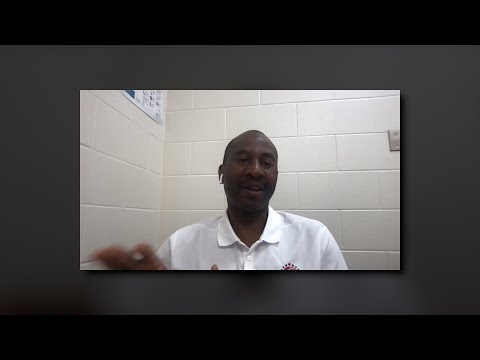
As young Draidyn Wollmann fights for life beneath the cutting deck of a stalled industrial mower, emergency responders rush to his aid and STARS is dispatched from more than 60 km away. A ground paramedic soon discovers that a blade from the mower is embedded in the boy’s chest and an arm is mostly severed. Responders wonder how they’re going to remove the mower without causing further damage. Watch the ground paramedic and STARS transport physician discuss the challenge in a bonus video below.
And I thought to myself that I am burying my kid. He’s in a million pieces, knowing that there’s three blades underneath that mower deck.”
- Kevin Burrell, Firefighter and first responder
Episode 2 Bonus Content
-
Season 2, Episode 2 Transcript
00:00:01:28 – 00:00:33:13
Co-host Deborah Tetley: Before we start, a word of caution. As you know, STARS provides pre-hospital care for critically ill and injured patients who have sustained severe trauma or debilitating illnesses. It’s what we do. As such, some of the details in this podcast may be difficult for some listeners. The STARS mission being explored this season involves graphic descriptions of physical injuries to a youth. Psychological impacts are also detailed. The patients, family, and supporters have generously allowed us to tell this story as a personalized insight into STARS.00:00:33:16 – 00:01:07:18
Co-host Lyle Aspinall: And for that, we are genuinely grateful. The community, and everyone else who was involved, welcomed us with open arms to help us tell this story. Having spent time with about 20 people researching it and recording interviews on the phone, virtually, in studio, and right at the scene of the incident, we can tell you this: our conversations were raw and candid, and as such, some of the details uncomfortable. For this podcast, we’ve endeavoured to tell the story accurately without being too sensational. Still, listener discretion is advised.00:01:07:21 – 00:01:28:01
Christine Wollmann: Knowing that I was crying and upset, and then I’m like, all I thought was that, okay, this kid needs me. So I corrected my behaviour. I don’t know how I did it, but I did it. I just did my job with being a first responder and just started treating him as a patient instead of my own kid.00:01:28:04 – 00:01:35:15
Chris: When I got on scene, you could just see people everywhere, and I just jumped right into helping out with whatever I could.00:01:35:18 – 00:01:44:06
Kayla Burrell: We first responders are not machines. We are people just like you. What drives us is a passion for helping people and being there for our community.00:01:44:08 – 00:01:59:09
Co-host Deborah Tetley: Welcome to Mission Ready, presented by ARC Resources. This STARS podcast breaks down in detail one mission each season to give you a stronger understanding of how we provide critical care anywhere, and what happens before and after the mission. I’m Deborah Tetley.00:01:59:12 – 00:02:17:04
Co-host Lyle Aspinall: And I’m Lyle Aspinall. In Season 2, we’re analyzing an emergency response to a traumatic incident where a teenager was run over by an industrial-sized riding lawnmower in Laird, Saskatchewan. This is Episode 2: First Response.00:02:17:06 – 00:02:37:07
Co-host Lyle Aspinall: It’s July 19th, 2022, and Draidyn Wollmann, a 16-year-old boy, is still trapped under an industrial lawnmower and fighting for his life. STARS is on the way, and with him right now are EMS, firefighters, RCMP, and first responders. Most of these people are volunteers, just everyday folks helping their communities.00:02:37:10 – 00:03:04:04
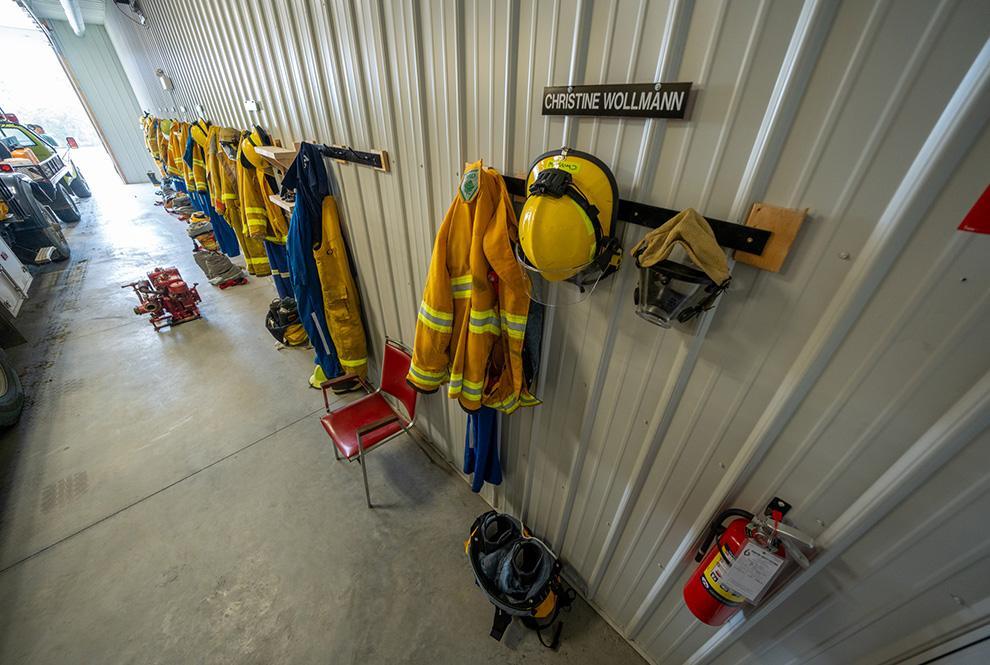
Co-host Deborah Tetley: Draidyn’s mom, Christine, is also there, as are his grandparents. Christine is a first responder and a volunteer firefighter. She learned about the call early on and rushed to the scene, but RCMP kept her from approaching her son as other response personnel did their work. It goes without saying the family is reeling. One of the initial first responders to arrive is Kayla Burrell, who you met in the previous episode.00:03:04:06 – 00:03:37:07
Kayla Burrell: We first responders are not machines. We are people just like you. Just like you. Just like me. What drives us is a passion for helping people and being here for our community. So, we were trained really well in Waldheim and just had the best leaders and resources to be the best we could be. I think most of us have it under our belt where we can remain calm. You know, our heart’s racing, but you have to, you just have to be calm or you can’t think straight and you can’t use your skills to help.00:03:37:10 – 00:03:44:24
Co-host Lyle Aspinall: Yeah. Staying calm in that kind of environment. Wow. But paint us a picture. When you get to Laird, when you get to Draidyn’s scene, what do you see?00:03:45:00 – 00:05:41:21
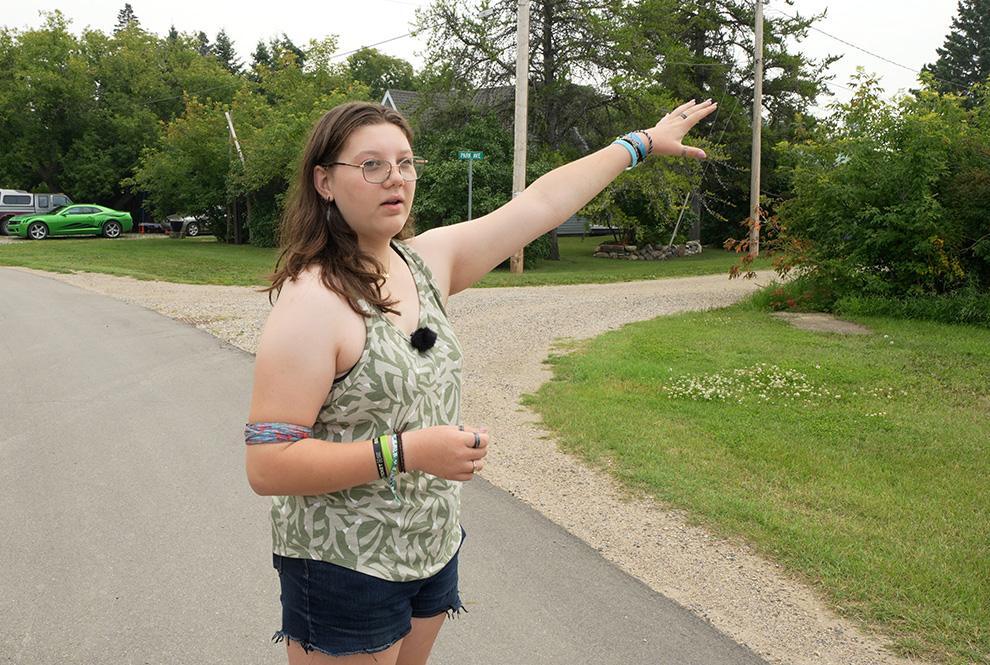
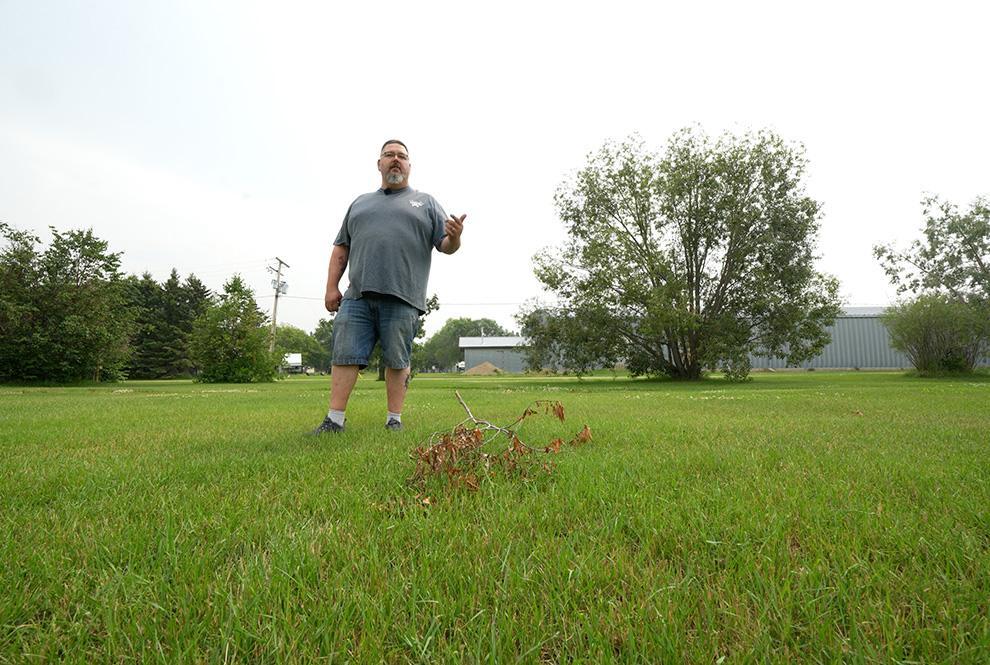
Kayla Burrell: Yeah, it was behind the arena in Laird and just kind of a grassy field area. And there was a pickup truck with, you know, the people who found him, and it was just a mower in the middle with Draidyn fully under. And where we saw, we came up on the right side of the mower, and his head and arm were out on the left side. So, what we thought was, we didn’t see anything when we were first coming up. And that was what’s really scary, you know? But thankfully we came up and, again, I’m adrenaline-rushed, scared because this is really going to test my skills, right? And we want to do right by him. So we walk over. We kind of got some history from the bystanders. How long he thought he’d been there. I made contact right away. “Hi, I’m Kayla Burrell. I’m with the Waldheim first responders. We’re here to help you.” You know, things we ask: How long you’ve been here. What’s your name? You know, I asked, Who’s your mom? Do you know what happened? Or, how long you’ve been here? You know what day it is, what month it is, just to see, you know, how with it he was. And he was. He was talking to me. He knew everything that was going on. What really struck me was that he told me, It’s in my lungs, he said. Like, the blades. He said, It’s in my lungs. And so, you know, we check pulse, we check oxygen. I had to wash the dry blood off his hands with hand sanitizer to get, you know, an oxygen level to read. Then we put oxygen on him right away. And then I continued asking questions, keeping him talking and just aware, because that’s what’s most important to me. Treating for shock, keeping him aware. And, you know, it was a really hot day. So I was concerned about that, you know, and under a hot mower. That, unfortunately, that wasn’t really something we could combat.00:05:41:24 – 00:06:38:12
Co-host Deborah Tetley: It’s quickly determined that Draidyn urgently needs top-tier critical care, medical supplies, blood transfusions and urgent transport to the closest trauma centre, which is in Saskatoon, more than 60 km away. He need STARS. Shae Evans was working in the STARS Emergency Link Centre, or the ELC, when the call came in. This is our 24-hour communications hub where we not only dispatch our own helicopters and other medical aircraft, we also link pertinent people into calls. This can range from doctors at receiving or sending hospitals to witnesses on the scene, first responders, police, firefighters, and the people we rely on to prepare a safe landing zone for our helicopter. Shae had recently moved from a different position in the ELC, and was just starting to take critical patient calls on her own after months of training. Despite how busy the ELC is and despite how busy summers are, the details of this mission are etched in her memory.00:06:38:15 – 00:07:29:14
Shae Evans: You know, in the summertime, especially like July, August, our volume just goes up so much. Like, we process probably about 100 calls a day from hospital and to pre-hospital calls. And I still, I remember that call. You know, normally, like, when you have 100 calls a day, you know, they all kind of start to blend. But that was probably one of my very first calls after just recently being signed off. So in the STARS Link Centre, you have six months of precept, so you can’t really take a call by yourself for six months. And they say typically it takes about a year to actually get really comfortable. But that was right after my sign-off and doing logistics too. So, dealing with the helicopter. And so that was really stressful. And then just, yeah, there’s kids calls. Like, anybody who has young kids, that typically takes a huge toll on anybody. You can just feel in the room with a traumatic event and with a kid, you can just feel the, you know, the tension in the room.00:07:29:14 – 00:07:37:21
Co-host Deborah Tetley: And you talked about room awareness and how the mood in the room changes when it’s a kid. Can you talk a little bit more about that? What did you see? What was the feeling in this case?00:07:37:23 – 00:07:50:12
Shae Evans: Yeah, I think everybody took a really, like, a deep breath, like, it’s going to be a hard call. But you know, we’re here to do a job and we do our job well up there. And, you know, we take care of ourselves and our family. But yeah, we do our job first.00:07:50:14 – 00:08:02:29
Co-host Deborah Tetley: Even though the duty crew has already had a heads up that this call might be coming. Shae handled the dispatch, speaking with one of the pilots who will fly the helicopter to Laird: Capt. Alex Parra.00:08:03:01 – 00:08:07:12
STARS Emergency Link Centre — Shae Evans: STAR 11, Link Centre. You’re on pre-alert for a scene call, 13 nautical miles northwest of Rosthern in Laird.00:08:07:12 – 00:08:11:01
STARS Emergency Link Centre — Alex Parra: Link Centre, STAR 11 copies, standby, weather.00:08:11:03 – 00:08:12:17
STARS Emergency Link Centre — Shae Evans: Standing by for weather.00:08:12:19 – 00:08:16:04
Co-host Lyle Aspinall: The weather was great, so the pilots had no concerns about accepting the mission.00:08:16:06 – 00:08:22:04
STARS Emergency Link Centre — Shae Evans: Copy, misstion accepted.00:08:22:07 – 00:08:22:09
ELC: (dispatch tones)00:08:22:09 – 00:08:26:07
STARS Emergency Link Centre — Shae Evans: STAR 11, Link Centre, you’ve been dispatched to the scene call in the town of Laird.00:08:26:09 – 00:08:31:00
STARS Emergency Link Centre — Alex Parra: Copy, Link Centre. Dispatched to the scene call, and standby for coordinates.00:08:31:01 – 00:08:38:06
STARS Emergency Link Centre — Shae Evans: STAR 11, Link Centre, coordinates as follows: 52 43 by 106 35.00:08:38:09 – 00:08:41:18
STARS Emergency Link Centre — Alex Parra: 52 43 — 106 35.00:08:41:18 – 00:08:42:20
STARS Emergency Link Centre — Shae Evans: Readback correct .00:08:42:23 – 00:08:52:19
Co-host Lyle Aspinall: At 3:10 in the afternoon, the STARS helicopter lifted off the ground, carrying flight paramedic Glen Pilon and flight nurse Bailey Sinclair. Alex Parra and Yves Bolduc were the pilots.00:08:52:21 – 00:08:54:04
ELC: STAR 11, Link Centre, go ahead.00:08:54:06 – 00:08:58:17
ELC — Glen: Skids up, outbound to the scene call in Laird. Four souls on board.00:08:58:17 – 00:09:10:11
ELC: STAR 11, roger, Link Centre, I copy. Up with four souls, outbound Laird area scene call. We have Laird fire on provincial fire for your landing zone.00:09:10:13 – 00:09:25:00
Co-host Lyle Aspinall: No one knows how long Draidyn had been under the mower. At that point, the best estimate said it might have been an hour before he was discovered by his boss, Warren. Time wasn’t on their side. Draidyn was fading, and Kayla could only continue to comfort him.00:09:25:02 – 00:09:36:21
Kayla Burrell: He was getting slower to talk back. You know, a little more gap time where he’d relax and I’d have to prompt him to stay awake. Promt him and just keep talking.00:09:36:24 – 00:09:52:23
Co-host Lyle Aspinall: Other than monitor his oxygen levels, there wasn’t much anyone could do for Draidyn medically until the mower was removed. Paramedic Gil Maraboto, from nearby Rosthern, set out to determine if it was possible to remove it without causing further damage. He reached his arm under the mower to investigate.00:09:52:26 – 00:10:44:25
Gil Maraboto: So I put my hand underneath and like, try to see what he refers to, like the pressure on the chest, because I can’t see. So like, well, I can feel it. So I start, like, moving on his abdomen, and it was good, and as soon as I started going up slowly, eventually, like, I feel like that’s something, like, hard, like, oh, the blade, like, it’s, like, oh yeah, the blade is inside his chest. So all the ribs were open on the right side. The blade was, I think, the blades stopped at some point, obviously and was stuck between the ribs and underneath, and everything was open in there, and I felt his arm, like, the first thing, the one other thing, when I keep going, one of– his left arm was, like, in two pieces. Like, okay, that’s not good. And I started to keep going down…00:10:44:27 – 00:10:53:29
Co-host Lyle Aspinall: Gil knew that removing the mower could cause damage, and the crews on the ground were not equipped to respond if Draidyn’s condition deteriorated. He decided to call the STARS doctor.00:10:54:01 – 00:11:21:15
Gil Maraboto: And so, I told the guys, you know, guys, like, there’s not much we can do. Let me call. Let me call the transport physician. I don’t know what I’m gonna do here because if we remove it right here and we’re by ourselves, I don’t know what we can do. Like, I want to just be sure that STARS is coming and see what we can do, because I don’t, honestly, I don’t know. Like, at this point we can give something for the bleeding and some TXA, and that’s it. There’s not much that can be done, and…00:11:21:18 – 00:11:29:20
Co-host Lyle Aspinall: He activated his radio and spoke with the Medical Communication and Coordination Centre in Saskatchewan, asking to be connected to the STARS Emergency Link Centre.00:11:29:22 – 00:11:30:29
STARS Emergency Link Centre — Sharlene Ernst: … Sharlene speaking…00:11:31:06 – 00:11:35:27
MCCC: Hi, it’s MCC Central. I’ve got a Rosthern EMS attendant on the line regarding that Laird call.00:11:35:29 – 00:11:39:25
STARS Emergency Link Centre — Sharlene Ernst: Perfect. Send them through and I will link them in with the transport physician.00:11:39:27 – 00:11:40:11
STARS Emergency Link Centre — Sharlene Ernst: Hello?00:11:40:15 – 00:11:40:24
STARS Emergency Link Centre — Dr. Segun Oyedokun: Hi.00:11:41:01 – 00:11:44:05
STARS Emergency Link Centre — Gil Maraboto: We have, like, a pretty serious case in here, so…00:11:44:12 – 00:11:48:08
STARS Emergency Link Centre — Sharlene Ernst: Okay, I’m going to link you in with the transport physician Dr. Oyedokun. One moment.00:11:48:11 – 00:11:49:16
STARS Emergency Link Centre — Gil Maraboto: Thank you.00:11:49:18 – 00:12:21:19
Co-host Deborah Tetley: We’re going to pause for just a second to explain what a transport physician is. STARS uses a physician-led model where doctors oversee care, train crews, and ensure quality control. STARS physicians provide patient care and medical expertise for all missions, 24 hours a day, seven days a week, and they are available to provide timely, consultative advice and guidance to other emergency services as required. These doctors have significant experience treating trauma patients in emergency departments and ICUs.00:12:21:21 – 00:12:35:18
Co-host Lyle Aspinall: STARS transport physician Dr. Segun Oyedokun was on the phone talking to EMS and firefighters at the scene while the STARS air medical crew was en route. Ground paramedic Gil Maraboto explained the situation.00:12:35:20 – 00:12:36:00
STARS Emergency Link Centre — Dr. Segun Oyedokun: Hello.00:12:36:07 – 00:12:42:12
STARS Emergency Link Centre — Sharlene Ernst: Hey, Dr. Oyedokun, it’s Sharlene again. I’ve got the EMS on scene with the young man that’s trapped under the mower.00:12:42:14 – 00:12:42:26
STARS Emergency Link Centre — Dr. Segun Oyedokun: Okay.00:12:43:03 – 00:12:44:11
STARS Emergency Link Centre — Sharlene Ernst: Thank you. One moment.00:12:44:14 – 00:12:46:18
STARS Emergency Link Centre — Gil Maraboto: Hi, this is Gilbert from Rosthern Ambulance.00:12:46:20 – 00:12:46:23
STARS Emergency Link Centre — Dr. Segun Oyedokun: Yes.00:12:46:23 – 00:13:29:07
STARS Emergency Link Centre — Gil Maraboto: We’re here on the scene with a 16-year-old that got trapped under a riding lawnmower. His left leg is totally, totally wrapped into the blades, and one of the blades is in his chest. So I’m trying to see what would be the best way to take him out from the lawnmower. Do we just remove the lawnmower out and see how bad it is, the blade in his chest? Or we should proceed different in this case? Like, no one can see yet. We only can see the blade, like, loose in, like… The chest is blocking the whole blade. So we’re assuming the blade is inside his chest. And the left leg is completely wrapped around the blade.00:13:29:07 – 00:13:29:18
STARS Emergency Link Centre — Dr. Segun Oyedokun: Oh, wow.00:13:29:21 – 00:13:41:12
STARS Emergency Link Centre — Gil Maraboto: I’m just waiting for STARS to land here. Yeah, I don’t know how to remove it from the lawnmower without… We have to take it off, like, move the lawnmower back. But I don’t know how much damage we’re going to cause while doing that.00:13:41:15 – 00:13:44:01
STARS Emergency Link Centre — Dr. Segun Oyedokun: Is he conscious and breathing?00:13:44:04 – 00:13:57:17
STARS Emergency Link Centre — Gil Maraboto: Yeah, he’s conscious and breathing, talking. He has, like, response and everything. His stats are, like, 96. We’re checking the blood pressure right now. We put on– There’s one arm available, so we put an IV to that arm.00:13:57:19 – 00:13:57:23
STARS Emergency Link Centre — Dr. Segun Oyedokun: Okay.00:13:57:23 – 00:14:02:02
STARS Emergency Link Centre — Gil Maraboto: And we’re going to check the blood pressure and see how he’s doing. He has oxygen already running.00:14:02:04 – 00:14:04:15
STARS Emergency Link Centre — Dr. Segun Oyedokun: Okay. So, which side of the chest?00:14:04:21 – 00:14:07:21
STARS Emergency Link Centre — Gil Maraboto: Left, left centre. Yeah, left centre, so. Yeah.00:14:07:23 – 00:14:17:04
STARS Emergency Link Centre — Dr. Segun Oyedokun: Okay, so this is where, I think, fire can come in. Do you have fire rescue services there with you?00:14:17:06 – 00:14:25:19
STARS Emergency Link Centre — Gil Maraboto: We have a volunteer team, so we can, like, I can put you through…00:14:25:21 – 00:14:30:21
Co-host Lyle Aspinall: And now, a quick word from our Season 2 sponsor.00:14:30:24 – 00:15:05:21
ARC Resources ad spot: As Canada’s third largest natural gas producer and the largest producer of condensate, ARC Resources is proud to play an important role in the responsible development of Canada’s energy resources. In delivering those resources, safety is the number one priority, always, and it’s that core value that makes ARC’s partnership with STARS a natural fit. It’s our shared goal to ensure that everyone arrives home safely at the end of the day. Learn more about how ARC is leading the way for safe and responsible energy development at arcresources.com.00:15:05:23 – 00:15:27:04
Co-host Lyle Aspinall: Welcome back. Dr. Oyedokun has worked at the Saskatoon STARS base since it opened in 2012, and has helped many patients through critical care needs over the years. He still remembers the details of this particular incident, though, much like everyone else we spoke with. He said it was one of two unrelated calls that happened simultaneously for STARS, and it was up to him to decide which one the crew would respond to.00:15:27:07 – 00:16:35:24
Dr. Segun Oyedokun: So, interestingly, there were two calls at the same time that needed STAR 11’s attention. There was another stab wound, but that one, EMS was close by, and that patient wasn’t too far from from a bigger hospital. So we felt comfortable that EMS could assess and transfer the patient to the nearby hospital. And so it was a clear choice that we were needed for this patient that got trapped under the lawnmower. So, yes, it was a bit of a shock. As a parent, too, I mean, I have two boys about that age, so it’s like, oh, yeah, this is serious. Let’s get moving. But the good thing about the system is, this is one of those instances where the air medical crew did not need my or any other transport physician’s permission to launch. It was serious enough for them to launch, and I just kind of communicated with them through the ELC or got updates while they were on the way. And at the right time, I actually had direct contact with them.00:16:35:27 – 00:16:39:15
Co-host Lyle Aspinall: Can you walk me through, sort of, what it is you said to them and why?00:16:39:18 – 00:18:38:22
Dr. Segun Oyedokun: Yes. So, one of the basic principles of trauma care, especially when you think there’s a foreign body embedded in the body, is not to remove the foreign body. One of the reasons for that is, sometimes the foreign body may have damaged or transected a blood vessel. So when you remove the foreign body, it just provokes severe bleeding. So, as much as possible, you want to leave that foreign body inside. The challenge in this case was, I couldn’t get a clear mental picture of exactly what was going on. What I heard was, it looks like one of the blades was stuck in the patient’s chest. So the challenge now is, how do you remove the lawnmower from the patient without removing the foreign body that is stuck in the body? But later it dawned on me that the entire patient was actually stuck under the deck in between the blades. So, it’s not just a matter of maybe smacking off a small foreign body, leaving it stuck in the body, and removing the rest of it. The patient was actually entirely stuck. So, I think one — if I remember correctly — one thing I said was, whatever you’re going to do, whether we’re going to remove the lawnmower completely or to separate the patient from the lawnmower, please, just let’s buy some time. Let’s wait for our team to get there. Then they can provide the critical resuscitation needed regardless of what is going on. So, my initial assessment was, Okay, yeah, this person is fairly stable right now, but there’s potential for rapid deterioration with penetrating injury; obviously bleeding, internal and external bleeding is of concern. And in this situation, gettng IV access, running IV fluid. And if blood is needed, to give him blood as soon as possible is life saving. Yeah. So getting our team there with blood was very important.00:18:38:25 – 00:18:46:16
Co-host Lyle Aspinall: He relayed his concerns and advised responders on the ground to wait. STARS was almost on scene, and they were carrying blood on board the helicopter.00:18:46:19 – 00:18:48:08
STARS Emergency Link Centre — Waldheim Fire Dept.: This is Waldhiem Fire, go ahead.00:18:48:11 – 00:19:01:04
STARS Emergency Link Centre — Dr. Segun Oyedokun: Hi, is there any way to remove the part of the mower that is in the patient as opposed to separating the patient from the lawnmower?00:19:01:10 – 00:19:15:27
STARS Emergency Link Centre — Waldheim Fire Dept.: No. Right now, he’s lodged in between the lawnmower and the deck itself. He’s sandwiched in there. His whole body is in— you know a lawnmower deck with the spinning blades? His whole body is underneath the lawnmower deck, and his head is sticking out.00:19:16:01 – 00:19:29:27
STARS Emergency Link Centre — Dr. Segun Oyedokun: Okay, so the STARS medical crew will be there shortly. And my recommendation for now is perhaps to wait until they get there and–00:19:30:00 – 00:19:30:26
STARS Emergency Link Centre — Waldheim Fire Dept.: Wait for STARS?00:19:31:04 – 00:19:34:21
STARS Emergency Link Centre — Dr. Segun Oyedokun: Yeah, they’re coming. They’ll be, they should be there shortly.00:19:34:21 – 00:19:37:11
STARS Emergency Link Centre — Waldheim Fire Dept.: They should be landing here within seconds.00:19:37:13 – 00:19:53:25
STARS Emergency Link Centre — Dr. Segun Oyedokun: Within seconds. Okay, well, let them get there. I mean, we have to get him off of the lawnmower. If it means removing parts– ideally, we want to leave whatever is stuck in the patient for as long as possible.00:19:53:25 – 00:19:55:01
STARS Emergency Link Centre — Waldheim Fire Dept.: Yeah. We’ll try.00:19:55:03 – 00:20:14:21
STARS Emergency Link Centre — Dr. Segun Oyedokun: So, that’s priority. But if not, we’re just going to have to remove him from the machine as much as possible. So wait a few more seconds for the team to get there. At least, when they get there, even when you remove him from the machine, you have extra medical support to take care of whatever you find.00:20:14:24 – 00:20:16:28
STARS Emergency Link Centre — Waldheim Fire Dept.: Yeah, we’re trying to do that. I gotcha.00:20:17:03 – 00:20:18:06
STARS Emergency Link Centre — Dr. Segun Oyedokun: Okay, thanks.00:20:18:08 – 00:20:19:20
STARS Emergency Link Centre — Waldheim Fire Dept.: Okay. Bye.00:20:19:22 – 00:20:27:06
Co-host Deborah Tetley: With STARS about to land close to Draidyn, members of the Laird Fire Department had prepared a landing zone in the adjacent field.00:20:27:09 – 00:20:28:18
STARS EMERGENCY LINK CENTRE — PROVINCIAL CALL CENTRE: Provincial Call Centre.00:20:28:20 – 00:20:30:17
STARS Emergency Link Centre — Shae Evans: Hi there. Shae calling from STARS.00:20:30:20 – 00:20:30:25
STARS EMERGENCY LINK CENTRE — PROVINCIAL CALL CENTRE: Hi.00:20:30:25 – 00:20:36:06
STARS Emergency Link Centre — Shae Evans: Hi, are you aware of this call out of Laird for a 16-year-old male? Are you guys attached?00:20:36:06 – 00:20:39:05
STARS EMERGENCY LINK CENTRE — PROVINCIAL CALL CENTRE: Laird fire has been dispatched.00:20:39:07 – 00:20:44:28
STARS Emergency Link Centre — Shae Evans: Excellent. We’re going to be going out, and seeing, we just need a landing zone secured, please, for 20 minutes.00:20:45:01 – 00:20:50:24
STARS EMERGENCY LINK CENTRE — PROVINCIAL CALL CENTRE: Okay, we will notify them.00:20:50:26 – 00:21:03:13
Co-host Deborah Tetley: Draidyn’s mom, Christine, had previously taken STARS landing zone training and helped to set up. You’ll recall that she had been asked by RCMP to stay away from her son. So she wanted to find some way to help.00:21:03:16 – 00:22:10:06
Christine Wollmann: Knowing that I was crying and upset… And then I’m like, all I thought was that, Okay, this kid needs me. So I corrected my behaviour. I don’t know how I did it, but I did it. I just did my job with being a first responder and just started treating him as a patient instead of my own kid. We would have lots of practice scenarios with landing STARS, like just pretending that they were there. Like, we’re setting up because you have to set up a perimeter and you have to watch for debris, and you have to make sure that where you’re going to be landing them is going to be a safe area. So, then I started helping with getting everything ready for STARS landing. I know my dad has, like, loose lumber in the back of his truck, so I said, Dad, you got to move your truck because that’ll fly out. So I got everything all cleared away from where I saw that they were setting up and then STARS was hovering over top.00:22:10:09 – 00:22:15:28
Co-host Lyle Aspinall: First responder Kayla Burrell remembers what she felt as the helicopter descended.00:22:16:01 – 00:23:02:23
Kayla Burrell: A relief, absolutely a relief. We as first responders have just emergent care. Like, you know, just oxygen, keep them awake. You know, just treat shock, you know, and that’s kind of the extent of what we do. There’s a lot more to it. But we’re not… we’re not trained for this, you know, like, ongoing care, you know, when your body’s damaged like that. Because I even felt like the paramedics– I was like, I don’t know if they’re trained for this either, you know, but the STARS critical care team is exactly what he needed. And I just thought, thank goodness we have more support.00:23:02:26 – 00:23:10:19
Co-host Deborah Tetley: Laird fire chief Chris Dennis had been out of town when he received the page for this call. He raced back from Saskatoon when he heard what happened.00:23:10:21 – 00:23:54:00
Chris Dennis: As I came into town, STARS was just coming in for landing. I could see the helicopter coming down. As I got on the scene, when I got there, Christine was standing off to the side and said that they won’t allow– they won’t allow her to go over and see him. And all she knows is his head was sticking out of the– out from underneath the lawnmower. I said, Okay. I said, you know, you’ve got the right people here. We’re doing our best. And, I walked onto the scene and I assisted with the rescue.00:23:54:02 – 00:24:12:04
Co-host Lyle Aspinall: This wasn’t just any incident for him. He and his family know the Wollmanns well. As you’ve already heard, his daughter Karleigh was good friends with Draidyn, and Chris and Christine volunteered together at the fire station. He knew about Draidyn’s summer job. So when that first call came in, even though there was no name attached, his heart sank.00:24:12:06 – 00:24:58:04
Chris Dennis: Just deep down, I knew exactly who it was. I knew. I didn’t know what had happened, but I knew who it was. So unless it was some other kids mowing their own personal yard and had an accident, I knew what it was. And then, of course, having to call Christine to say we’re getting a bad call. Hang on. Our family and Draidyn’s family are very personal, very close friends. Draidyn’s mom is actually the lead first responder in our community, and she’s one of my firefighters. It’s, it’s emotional. It’s emotional. I mean, even right now, it’s very hard because that was, you know, personal, you know, and…00:24:58:06 – 00:25:06:02
Co-host Lyle Aspinall: Another first responder, Kevin Burrell, whose wife, Kayla, you heard from earlier, had immediately left Saskatoon as soon as he got word of the incident.00:25:06:05 – 00:25:10:12
Kevin Burrell: When I got there, it was like there was a hockey game at the rink. There was so many cars parked around there.00:25:10:12 – 00:25:21:07
Co-host Lyle Aspinall: As you recall, Kayla was already at Draidyn’s side. And remember: Kevin and Kayla, Chris Dennis and his family, Christine and her family — they’re all good friends.00:25:21:10 – 00:25:46:04
Kevin Burrell: Laird and Waldheim work really closely together. We train together. We attend all of the calls together, and we socialize together. You know, two small towns that close together. Small farming community. We hang out after calls. We get together just for fun and that kind of thing. So, you know, Chrissy is a pretty good friend.00:25:46:07 – 00:25:50:17
Co-host Lyle Aspinall: He was already aware that the trapped and struggling teenager was Christine’s son.00:25:50:19 – 00:26:59:20
Kevin Burrell: In my 11 or so years as a firefighter and first responder, that was probably my most traumatic call as far as the seriousness of it. And when it’s a teenager or a kid, it seems to elevate the seriousness of the call for everybody. Having known who it is and being good friends with the family — worked with Chrissy a lot — that kind of makes it a little more close to home. But yeah, that’s probably most what makes it the hardest. I’ve seen enough serious enough incidents to… you can, just by looking at somebody, you can kind of tell if they’re going to make it or not. From looking at him, I didn’t think he was going to make it.00:26:59:22 – 00:27:02:05
Co-host Lyle Aspinall: Next time on Mission Ready.00:27:02:08 – 00:27:17:10
Bailey: I remember landing on the scene. And like I said earlier, our training is absolutely incredible. It is the most in-depth, best learning experience I’ve ever had. But nothing prepares you for that. It was like nothing I’ve ever seen before.00:27:17:13 – 00:27:31:04
STARS flight paramedic Glen Pilon: From my 30 years of experience, when somebody is trapped like that and very hypotensive and with difficulty breathing, you know that they only have about 10 minutes left to live.00:27:31:06 – 00:27:36:09
Co-host Deborah Tetley: Mission Ready, presented by ARC Resources, is produced in-house by me, Deborah Tetley.00:27:36:13 – 00:27:42:05
Co-host Lyle Aspinall: And me, Lyle Aspinall Aspinall. Watch video clips from this season at STARS.ca/missionready.00:27:42:07 – 00:27:58:27
Co-host Deborah Tetley: Mission Ready contains original theme music by Kaiya Gamble, whose dad was a longtime STARS pilot and whose mom was once a transport physician. Check her out at kaiyagamble.com. Please rate and review Mission Ready wherever you found it, and be sure to tell your friends about it. Also, check out Season 1.00:27:59:00 – 00:28:05:10
Co-host Lyle Aspinall: Want to be a STARS ally? Get involved and support our mission by visiting STARS.ca. Until next time, thanks for listening.